

Seventeen Years in the Making: Why Kathryn Stockett’s “The Calamity Club” Won’t Let Go
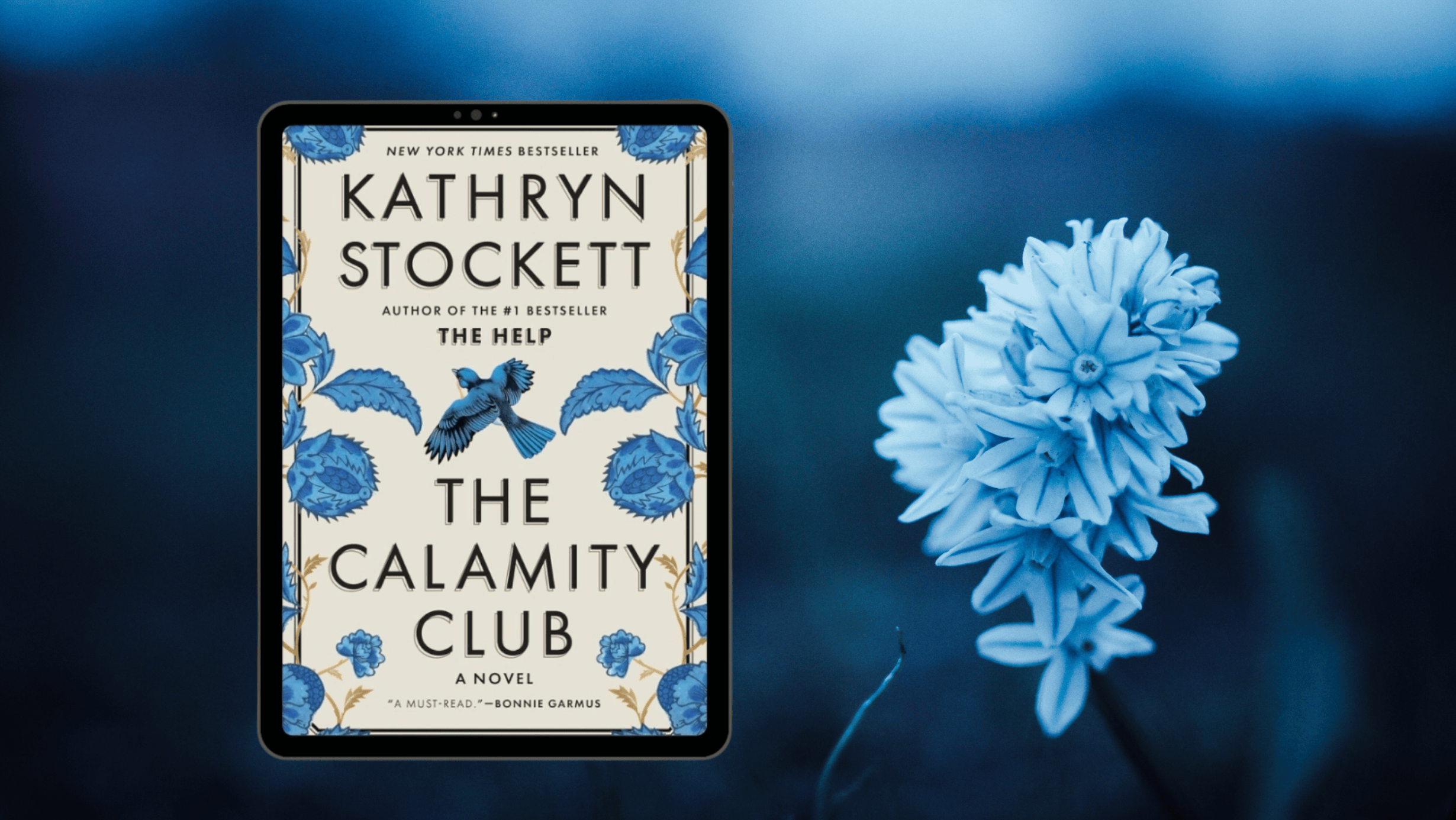
(By Justine Castellon / for Just Reading Nook) Have you ever loved a book so much that you low-key resented the author for never writing another one? That’s been me and Kathryn Stockett since 2011, when I finished The Help on a red-eye flight, sobbed quietly into an airline pillow, and then spent the next decade and a half periodically Googling “Kathryn Stockett new book” like it was a nervous tic. So when The Calamity Club showed up on my radar earlier this year, I will admit I went in with dangerously high expectations. I’m happy to report she cleared the bar. I’m also going to be honest about the parts where she just barely cleared it.
So, What’s It About?
I’ll keep this spoiler-free because I genuinely think you deserve to experience this one without me ruining the fun parts. Here’s the setup: it’s 1933, Oxford, Mississippi, deep in the Great Depression, and we meet three women who have every reason to give up on each other and don’t. There’s Meg, eleven years old, stuck in an orphanage as one of the “big girls” nobody wants to adopt, quietly convinced her mother abandoned her on purpose. There’s Birdie, who shows up in Oxford to beg her much fancier, much more buttoned-up sister for money to save her struggling family, and who does not have the personality of a woman who enjoys begging for anything. And then there’s Charlie, who’s had a rough go of it and is running on stubbornness and grit more than anything resembling luck.
Their lives collide, and what follows is one of those “watch three women get increasingly resourceful and increasingly reckless” plots that I am a complete sucker for. I won’t tell you what the scheme actually is, but I will say it made me laugh out loud more than once, and also made me genuinely uncomfortable in the way good fiction should. This isn’t just a cozy period piece. Stockett’s opening is a sharp, old-fashioned hook: Meg’s life in the orphanage is drawn with enough institutional chill to sting, and Birdie’s sister-plot arrival in Oxford immediately exposes the town’s polished surface as a lie. And what follows isn’t mere period garnish, either. The novel treats forced sterilization as policy with a human cost, a real and horrifying piece of 1930s Mississippi law, and then lets Depression-era sex work arrive without softening: dark, transactional, and cruel enough to puncture the book’s more companionable charm. It’s a book that knows how to make you laugh right before it reminds you what was actually at stake for women in this era.

Why Has Everyone Been Reading This All Summer?
I am clearly not alone in loving this one. The Calamity Club came out May 5 and hit the New York Times bestseller list at number one right out of the gate. As of this writing, it’s been sitting on that list for roughly fifteen weeks straight, which for a 600-plus-page work of historical fiction is genuinely impressive. Books that long are not supposed to hang around bestseller lists for months, and yet here we are.
Some of that is obviously pent-up demand. People have been waiting seventeen years for this. It was the number one most anticipated fiction title on Goodreads before it even came out, which tells you something about how starved readers were. But I don’t think nostalgia alone explains a fifteen-week run. I think it’s because the book is, plainly, a great hang. Publishers Weekly called it “by turns hilarious and heartbreaking,” and honestly, that’s the whole appeal in five words. One Goodreads reviewer put it even more simply, admitting she was “sad when it came to an end” despite the door-stopper length, and yeah, same.
But the real engine, at least for me, is the found-family thing at the center of it. Meg, Birdie, and Charlie aren’t friends by choice at first. Circumstances throw them together, and they choose to stay. There’s something about watching three women build their own little unit of loyalty when the actual systems around them, the orphanage, the county, respectable Oxford society, keep failing them, that just gets me every time. It’s the same emotional muscle The Help worked, just pointed in a different direction.

Who Should Pick This Up?
If you were a The Help person, obviously, yes, read this. But even if you weren’t, if you liked Kristin Hannah’s The Four Winds, this is going to scratch a similar itch. In fact, Barnes & Noble is marketing it as “The Four Winds meets Hang the Moon,” which feels about right to me. It’s got that same “women enduring hard history and refusing to be flattened by it” energy that’s clearly having a moment in book club fiction right now.
One honest caveat: this is a 600-plus-page commitment. It is not a weekend read. The front half moves a little slower while Stockett sets up all three women’s situations, so if you’re the type who needs instant plot momentum, give it a little patience before it locks in. And I’d flag, gently, that this book goes to some genuinely dark places: institutional cruelty, coerced sterilization, and yes, sex work played completely straight, no sanitizing. If you go in expecting pure Southern comfort-food fiction the whole way through, you’re going to get whiplash. I actually think that’s a feature, not a bug, but you should know what you’re signing up for.
Worth noting too, if you loved The Help specifically for its portrait of Black domestic workers in the Jim Crow South, this book is doing something different. The Calamity Club is centered almost entirely on white women’s experience of Depression-era poverty. It’s not the same conversation The Help was having, and I don’t think it’s trying to be.
Okay, But How’s the Writing?
This is the part where Stockett really earns her reputation, in my opinion. Her dialogue does that thing where it doesn’t feel written at all, it feels like you’re eavesdropping on an actual conversation happening in an actual kitchen in 1933 Mississippi. The New York Times Book Review said her prose “gives the impression of being not crafted at all, but inevitable,” and I don’t think I could describe it better myself.
The book splits narration between Birdie and Meg, and Meg is, without question, the standout. She’s got this scrappy, funny, wounded voice that reminded me of Frankie from Carson McCullers’s The Member of the Wedding, but she’s not derivative, she’s fully her own kid. I found myself missing her chapters when we’d shift back to Birdie’s perspective, which might be my one real gripe: the two narrators don’t always feel like they’re pulling equal weight.
The Verdict
Was it worth the seventeen-year wait? For me, yes, without question. It’s not a flawless book, the pacing sags a little in the middle, and the two-narrator structure occasionally feels like it’s straining at the seams, but the characters are so alive and the emotional core is so genuinely earned that I forgave the rough patches pretty quickly. I’ll say this too, in the interest of setting expectations: this isn’t a drop-everything, cancel-your-plans kind of read. It took me the better part of a week, picked up in stolen pockets of time between deadlines, and that pacing suited it just fine. It’s a slow burn in the best sense, the kind of book you’re happy to keep returning to rather than one that demands you binge it in a weekend. But slow burn or not, this is a highly recommended read. If you’ve been waiting on Stockett the way I have, go ahead and let this one sit on your nightstand for a while. However long it takes you to finish it, it’s absolutely worth the time.

Justine Castellon is a brand strategist with an innate ability to weave compelling narratives. She seamlessly blends her professional insight with her passion for literature. Her literary works include romantic drama novels—Four Seasons, The Last Snowfall, Gnight Sara / ‘Night Heck, and I Love You, Sunday Sunset. With her ability to tell stories that linger long after the last word, Justine leaves a mark not only in the world of branding but also in the hearts of her readers.
www.justcastellon.com


