
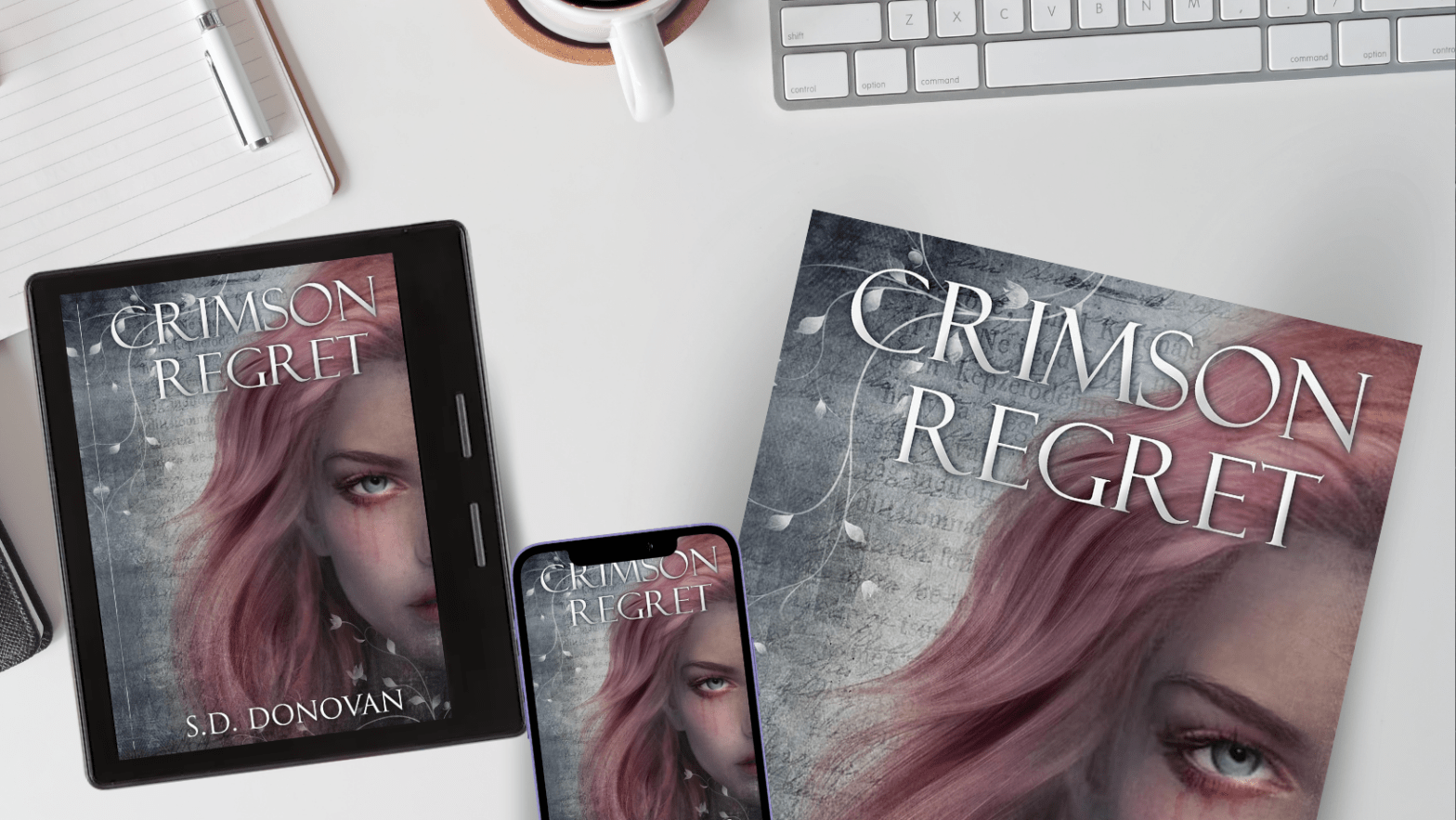
At its heart, Crimson Regret by S. Donovan is a story about survival, identity, and the crushing weight of mental illness, all wrapped in a chilling supernatural narrative. This is the story of Amy Kennedy, a 16-year-old girl living in the fictional town of Englewood, a place steeped in a dark history of witch trials and executions dating back to the 17th century. This historical backdrop is not just a setting but a living, breathing force that shapes the town’s present and Amy’s personal struggles.
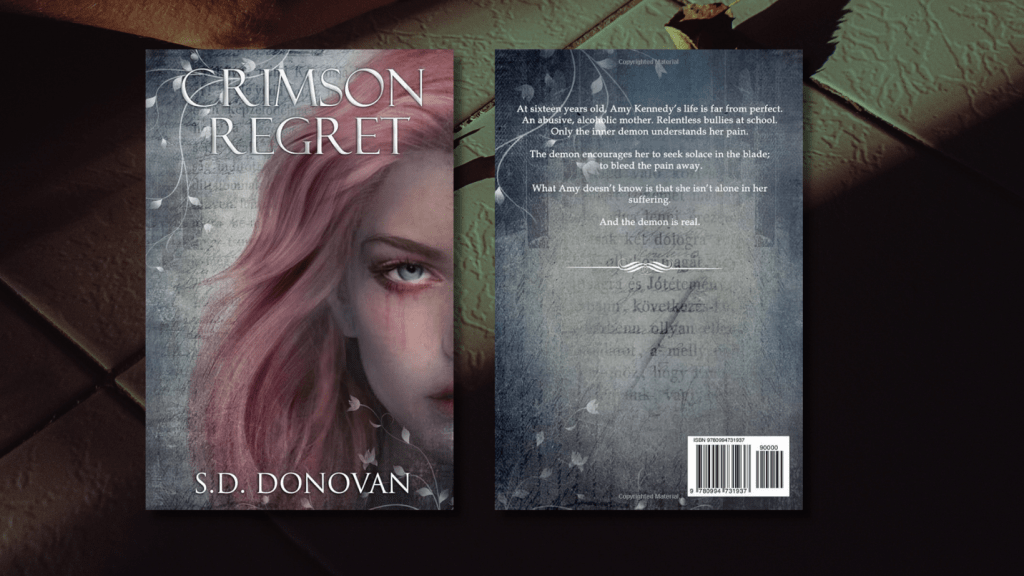
Amy’s life is a relentless cycle of suffering. At home, she endures the anger of her abusive, alcoholic mother, a former prom queen whose bitterness and violence have consumed her. Her father, though present, is passive and complicit, offering no refuge from the chaos. School is no better; Amy is the target of relentless bullying. They accused her of witchcraft, reaffirming Englewood’s dark past. These accusations, though baseless, serve as a metaphor for the way society isolates and demonizes those who are different or struggling.
Amy finds herself drawn to self-harm as a coping mechanism, a way to temporarily silence the pain that feels inevitable. This is where Jezebel, her “inner demon,” comes into play. Jezebel is more than just a voice in Amy’s head; she is a sinister presence that seems to understand Amy’s pain in a way no one else does. Jezebel’s whispers are both seductive and destructive, urging Amy toward harmful behaviors while promising comfort and sympathy. Jezebel’s nature—whether she is a figment of Amy’s fractured psyche or a genuine supernatural entity—adds a layer of psychological complexity to the story.
As the story unfolds, Amy begins to uncover the truth about Englewood’s history and its connection to her own suffering. The town’s past is riddled with stories of witch hunts, executions, and a lingering curse that seems to affect its residents. This historical trauma is mirrored in the present, as Amy discovers she is not alone in her struggles. Other characters, like Chloe, a cheerleader who initially follows the bullies but later becomes an ally, reveal their own battles with depression and possession by Jezebel. Chloe’s transformation from antagonist to friend highlights the pervasive nature of mental illness, showing that it can affect anyone, regardless of their outward appearance or social status.
Kristian, the star quarterback, serves as another unexpected ally. His kindness and willingness to see beyond Amy’s reputation provide a glimmer of hope in an otherwise bleak storyline. However, the story does not shy away from the reality that even support and connection cannot always overcome the weight of trauma and mental illness. This is a recurring theme throughout the book: the idea that while help and understanding are crucial, they are not always enough to “fix” someone.
The climax of the story is both shocking and inevitable, a culmination of the tension that has been building throughout the narrative. Without delving into spoilers, it is safe to say that the ending is not a traditional resolution. Donovan deliberately avoids a neat, happy conclusion, instead opting for a tragic yet fitting finale that underscores the story’s themes of pain and the complexity of mental health. The ending ties back to Englewood’s lore, revealing the full extent of Jezebel’s influence and the town’s curse. It leaves readers with a sense of unease and reflection, challenging them to confront their own perceptions of mental illness, morality, and redemption.
The Role of Englewood’s History
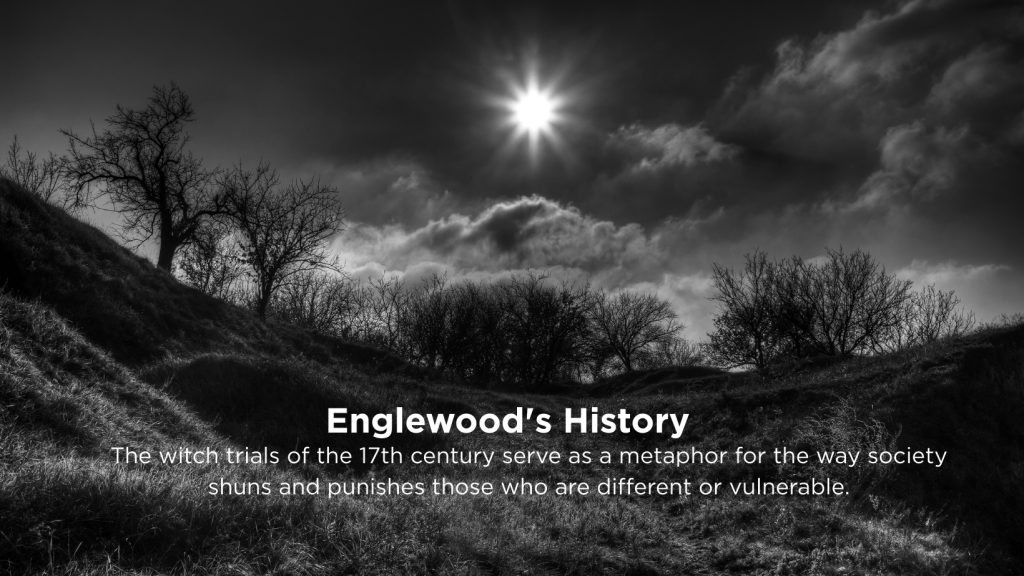
I like Englewood as a fictional town, almost a character in the story. Its dark history casting a shadow over every event. The witch trials of the 17th century serve as a metaphor for the way society shuns and punishes those who are different or vulnerable. Amy’s experiences with bullying and accusations of witchcraft echo this historical persecution, creating a sense of cyclical trauma that spans generations. The town’s lore is intricately woven into the story, with Donovan using it to explore themes of guilt, shame, and the lingering effects of collective trauma.
The supernatural elements are deeply tied to this history. Jezebel, as a demonic figure, represents both the personal and collective pain of Englewood’s residents. Her presence blurs the line between psychological and supernatural horror, forcing readers to question whether she is a manifestation of Amy’s mental illness or a real, malevolent force. This adds depth to the story, making it as much a psychological thriller as it is a horror novel.
Themes of Isolation and Connection
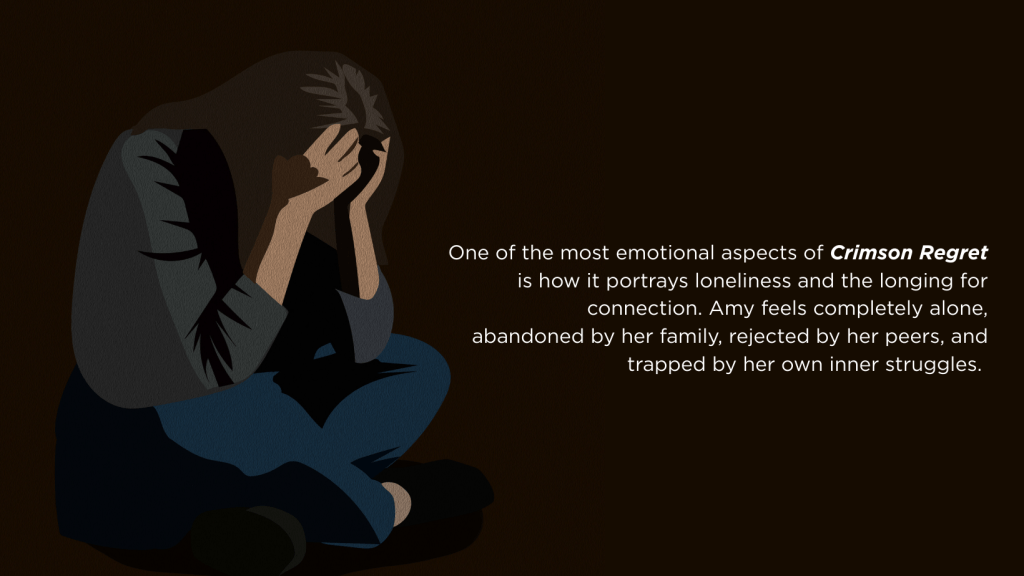
One of the most emotional aspects of Crimson Regret is how it portrays loneliness and the longing for connection. Amy feels completely alone—abandoned by her family, rejected by her peers, and trapped by her own inner struggles. Yet, there are moments of light. Her growing friendship with Chloe, her interactions with Kristian, and brief flashes of self-awareness show that even small connections can offer comfort and hope during dark times.
Still, Donovan doesn’t sugarcoat the truth: connection, while important, isn’t always enough to overcome the weight of mental illness. The story’s tragic ending drives home the complexity of these struggles, showing that healing isn’t simple or guaranteed. It’s a sobering but honest reminder of the challenges faced by those battling mental health issues.
The Supernatural as a Metaphor
The supernatural elements in Crimson Regret cleverly symbolize the struggles of mental illness. Jezebel, the demon, represents the destructive pull of depression and self-harm. Her whispers mimic the intrusive thoughts many people face, and her false promises of relief show how harmful coping mechanisms can feel tempting but dangerous. By turning these struggles into a literal demon, Donovan helps readers grasp the intense, internal battles that come with mental health challenges.
What makes Jezebel even more interesting is that she’s not entirely evil. At times, her actions and motives seem almost sympathetic, blurring the line between villain and victim. This complexity adds depth to the story, encouraging readers to think about suffering, morality, and how we respond to pain in ourselves and others.
Lessons Learned
The novel imparts several powerful lessons:
- The Duality of Pain and Hope: While the story is steeped in tragedy, it also showcases the fleeting moments of connection and support that can make a difference, even if they don’t always lead to a happy ending.
- The Importance of Empathy: Amy’s journey highlights the need for compassion and understanding toward those battling mental health challenges. Donovan emphasizes that no one truly wants to die—they simply want the pain to end.
- The Weight of Stigma: Through its characters and themes, the book underscores how societal judgment and indifference can exacerbate personal struggles, urging readers to break the silence around mental health.
Donovan’s Writing Style
Donovan’s prose is colorful and emotionally charged, perfectly suited to the novel’s heavy themes. His relatable characters ensure that readers feel every ounce of Amy’s pain and suffering. The horror elements are subtle, focusing on psychological and emotional terror rather than unnecessary gore. Donovan’s world-building is immersive, with Englewood’s cursed history adding depth and atmosphere to the story. The pacing is tight, keeping readers engaged while allowing space for reflection. However, the intensity of the subject matter may be overwhelming for some, making the trigger warnings essential.
Is It Worth Reading?
Absolutely—Crimson Regret is a must-read for fans of YA horror and those seeking stories that tackle mental health with reality and sensitivity. The novel’s heavy themes and tragic ending may not be for everyone, but for those who can handle its intensity, the book offers a powerful reminder of the importance of empathy and the fight against stigma.
Available in Kindle and paperback. Get your copy at https://www.amazon.com/Crimson-Regret-S-D-Donovan-ebook/dp/B0BY7689TL/

Justine Castellon is a brand strategist with an innate ability to weave compelling narratives. She seamlessly blends her professional insight with her passion for literature. Her literary works include romantic drama novels—Four Seasons, The Last Snowfall, Gnight Sara / ‘Night Heck, and I Love You, Sunday Sunset. With her ability to tell stories that linger long after the last word, Justine leaves a mark not only in the world of branding but also in the hearts of her readers.




 Just Reading Nook