

Guillermo del Toro’s Frankenstein (2025) is a cinematic tour de force that breathes new life into Mary Shelley’s timeless tale. With its lush visuals, emotionally resonant performances, and a deeply philosophical narrative, the film stands as a testament to del Toro’s mastery of gothic storytelling. At 149 minutes, this adaptation is both a sprawling epic and an intimate exploration of humanity, creation, and the consequences of playing God.
Del Toro’s Vision: A Gothic Masterpiece
Del Toro’s Frankenstein is set in 1857, a deliberate choice that situates the story in the heart of the Victorian era, a time of scientific discovery and moral questioning. The film opens in the icy Arctic, where Victor Frankenstein (Oscar Isaac) is found near death, pursued by his own creation. This framing device, borrowed from Shelley’s novel, sets the stage for a tale of obsession, tragedy, and redemption.
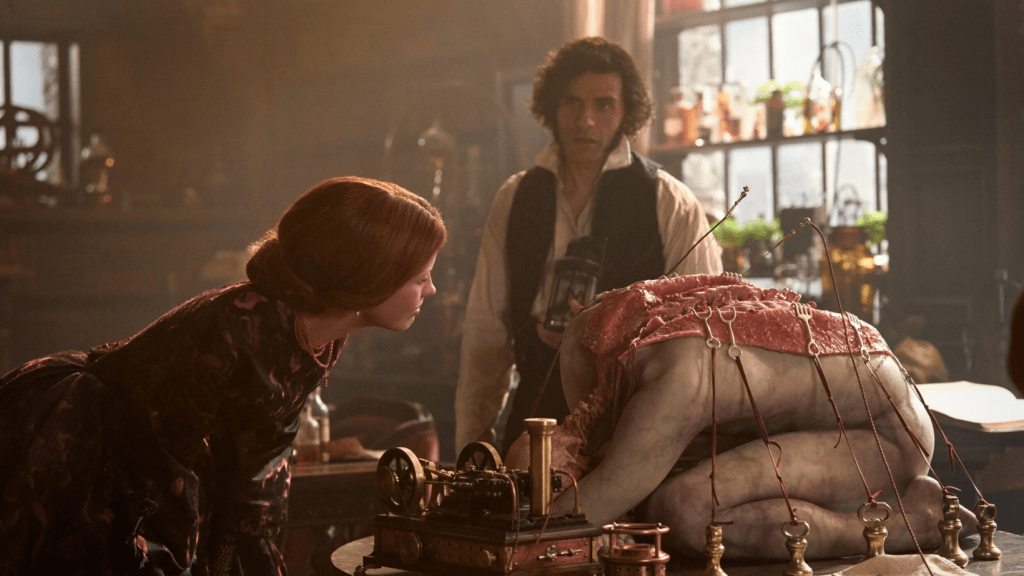
The director’s signature style is evident in every frame. From the hollow, shadowy laboratories to the intricate costumes, del Toro’s attention to detail creates a world that is both beautiful and unsettling. The creature, played by Jacob Elordi, is a marvel of design—his patchwork skin and haunting eyes evoke both fear and sympathy. Del Toro’s use of color, particularly his beloved reds and blacks, adds to the film’s gothic atmosphere, while Alexandre Desplat’s score underscores the emotional weight of the story.


A Stellar Cast
The performances in Frankenstein are nothing short of extraordinary:
Christoph Waltz and Charles Dance round out the cast with compelling performances as Victor’s benefactor and abusive father, respectively. Their characters serve as mirrors to Victor’s own flaws and ambitions.
Oscar Isaac delivers a nuanced portrayal of Victor Frankenstein, capturing the character’s brilliance, arrogance, and descent into madness. His Victor is a man driven by grief and ambition, whose hubris blinds him to the consequences of his actions.
Jacob Elordi as the Creature is a revelation. He fills the monster with a heartbreaking vulnerability, portraying him as a being torn between his desire for acceptance and the pain of rejection. Elordi’s performance is both physical and emotional, making the creature a tragic figure rather than a mere horror trope.
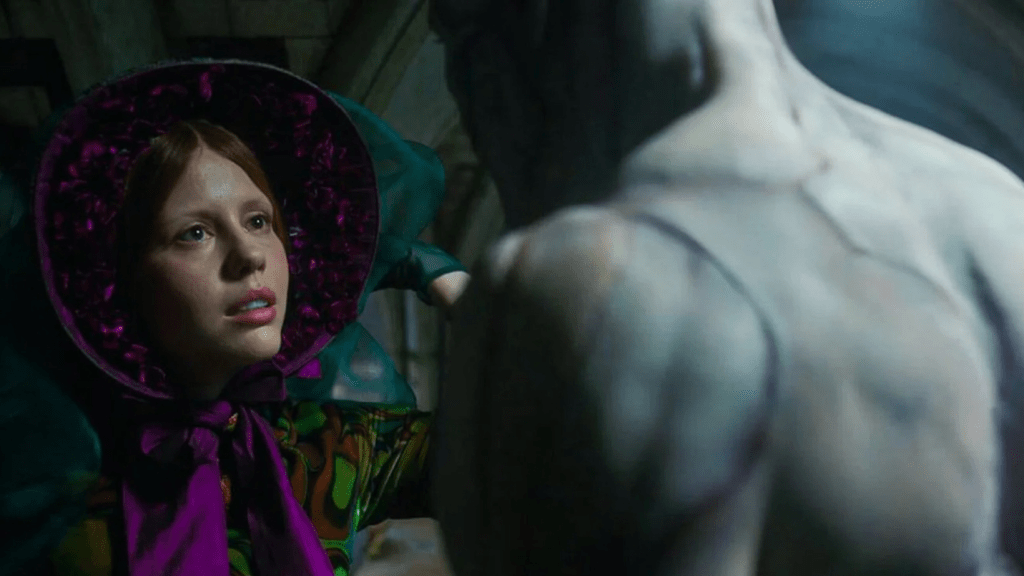
Mia Goth shines as Elizabeth, Victor’s love interest and moral compass. Her character is given more depth in this adaptation, as she forms a bond with the creature, adding a layer of complexity to the story.


A Fresh Take on a Classic
Del Toro’s Frankenstein is not a direct adaptation of Shelley’s novel, but rather a reinterpretation that draws inspiration from the book while making bold narrative choices. These changes set it apart from previous adaptations:
A Redemptive Ending: In Shelley’s novel, the creature vows to destroy himself after Victor’s death, consumed by guilt and despair. Del Toro’s film, however, offers a more hopeful conclusion. The creature forgives Victor and finds a moment of peace, watching the sunrise as he comes to terms with his existence. This ending reframes the story as one of redemption and reconciliation, rather than pure tragedy.
Victor’s Backstory: In the novel, Victor’s childhood is idyllic, with loving parents who nurture his curiosity. Del Toro, however, reimagines Victor as the son of an abusive father (Charles Dance), whose cruelty drives Victor’s obsession with conquering death. This change adds psychological depth to Victor’s character, making his actions more understandable, if not excusable.
The Creature’s Innocence: Unlike the grunting, lumbering monsters of earlier films, del Toro’s creature is intelligent, sensitive, and deeply human. Jacob Elordi’s portrayal emphasizes the creature’s innocence and longing for connection, making his eventual rage all the more tragic. This interpretation is closer to Shelley’s original vision, where the monster is eloquent and philosophical.
Romantic Undertones: The film introduces a romantic tension between the creature and Elizabeth, a departure from the novel. This adds a layer of complexity to the story, as Elizabeth becomes a symbol of the creature’s yearning for acceptance and love.

Themes and Philosophical Depth
At its core, Frankenstein is a story about creation and the responsibility that comes with it. Del Toro delves deeply into these themes, exploring the moral and ethical implications of Victor’s experiments. The film portrays Victor as a flawed “God,” whose inability to love and nurture his creation leads to destruction. The creature, in turn, becomes a mirror for Victor’s own failings, embodying the consequences of his hubris.
The film also examines the nature of humanity. What does it mean to be human? Is it our physical form, our intelligence, or our capacity for love and empathy? Through the creature’s journey, del Toro challenges the audience to confront their own biases and assumptions about what it means to belong.
Visual and Musical Brilliance
Del Toro’s Frankenstein is a feast for the senses. The production design, led by Tamara Deverell, is a masterclass in gothic aesthetics. From the towering, crumbling towers of Victor’s laboratory to the icy desolation of the Arctic, every setting is meticulously crafted to enhance the story’s mood and themes.
Alexandre Desplat’s score is equally impressive, blending haunting melodies with moments of sweeping grandeur. While some critics have noted that the music occasionally feels out of place, particularly during scenes of violence, it ultimately adds to the film’s operatic quality.

Comparisons to Previous Adaptations
Del Toro’s Frankenstein stands out as one of the most faithful yet innovative adaptations of Shelley’s novel. While it pays homage to earlier films, such as James Whale’s 1931 classic and the Hammer Horror series, it carves its own path by focusing on the emotional and philosophical aspects of the story. The creature’s design, for example, is a departure from the square-headed monster popularized by Boris Karloff, instead emphasizing his humanity and vulnerability.
Is It Worth Watching?
Without a doubt, Frankenstein is a must-watch for fans of gothic cinema, del Toro’s work, and Mary Shelley’s novel. It is a film that demands to be seen on the big screen, where its visual and emotional impact can be fully appreciated. While it takes liberties with the source material, these changes serve to enhance the story’s timeless themes and make it accessible to a modern audience.
Guillermo del Toro’s Frankenstein is a triumph of storytelling and artistry. It is a film that honors its source material while daring to reimagine it for a new generation. With its stunning visuals, powerful performances, and thought-provoking narrative, it is a modern classic that will resonate with audiences for years to come.

Justine Castellon is a brand strategist with an innate ability to weave compelling narratives. She seamlessly blends her professional insight with her passion for literature. Her literary works include romantic drama novels—Four Seasons, The Last Snowfall, Gnight Sara / ‘Night Heck, and I Love You, Sunday Sunset. With her ability to tell stories that linger long after the last word, Justine leaves a mark not only in the world of branding but also in the hearts of her readers.




 Just Reading Nook