

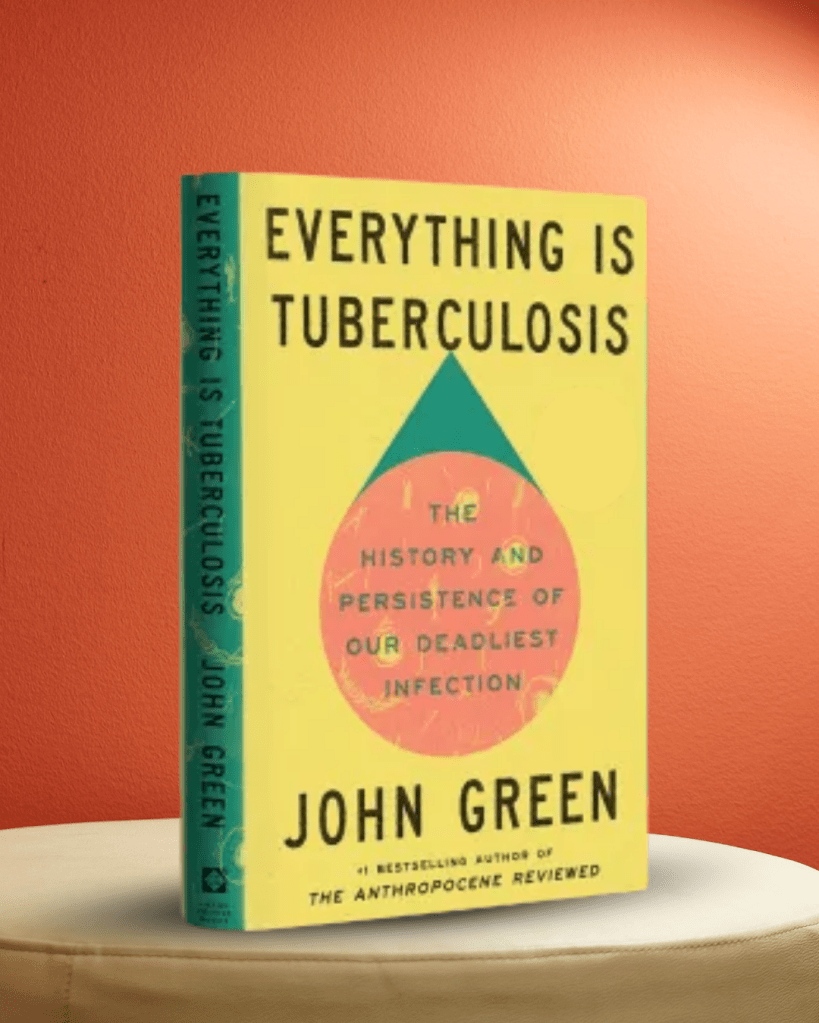
John Green’s Everything Is Tuberculosis is a daring yet genuine exploration of the world’s deadliest infectious disease, blending meticulous research with deeply human storytelling. It’s a bold departure from Green’s celebrated Young Adult work, yet it carries his unmistakable voice, marked by curiosity, empathy, and a knack for making the complex accessible and personal. With this nonfiction book, Green turns his pen to one of the most pressing yet frequently overlooked global health crises, inviting readers to confront not just the history of Tuberculosis (TB) but its ongoing, preventable devastation.
“Nothing is so privileged as thinking history belongs to the past.”
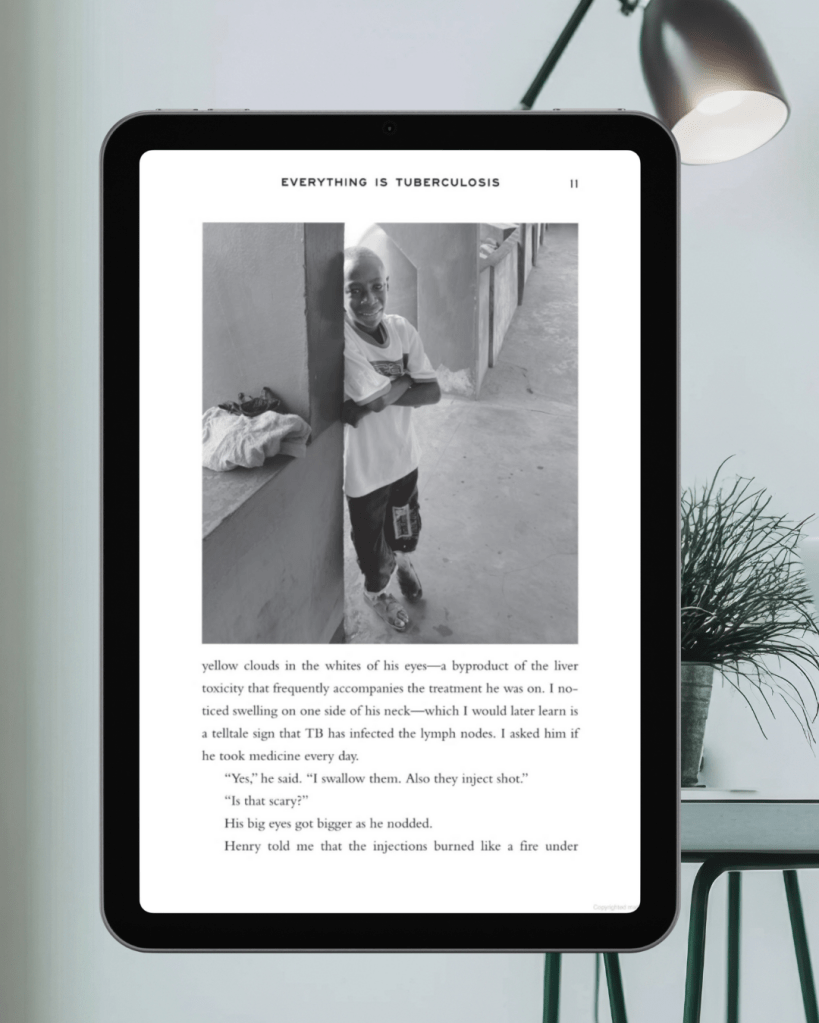
At its core, Everything Is Tuberculosis is the story of Henry, a boy Green met in Sierra Leone in 2019 while working with Partners in Health. Henry’s charm and resilience become a narrative throughline, grounding the book’s exploration of this disease in the lived experience of someone fighting for survival. Green uses Henry’s battle against TB as a lens to examine the enduring inequities and systemic failures that sustain the disease’s grip on over a million lives annually.
The book deftly weaves together historical, scientific, and social threads. Green traces the romanticized image of Tuberculosis from centuries past, when it was seen as a disease by poets and artists, to its modern reputation as a “disease of poverty.” Readers are introduced not just to the biology of TB but to its symbolism and the cultural shifts in how society has viewed and stigmatized those afflicted by it. Along the way, Green shows how TB is a product of human-made disparities, a disease that persists not because we lack cures but because we fail to prioritize equitable healthcare.
How It Differs From Green’s Previous Work
Fans of Green’s fiction will recognize his signature introspection and emotionally resonant prose, but Everything Is Tuberculosis stands apart in its scope and purpose. Where his novels like The Fault in Our Stars and Looking for Alaska focus on the inner lives of young protagonists, this book zooms out to confront systemic injustices and the broader human condition.
That said, Green’s ability to connect the personal with the universal shines through. Much like in The Anthropocene Reviewed, Green balances big-picture analysis with intimate anecdotes. His personal reflections—including a painfully candid exploration of his own battles with obsessive-compulsive disorder (OCD)—help him articulate how illness, whether mental or physical, reshapes lives. Green’s investment in the subject feels visceral, and he transforms medical data into relatable, gripping prose.
What’s most striking is how the tone of this book aligns with advocacy. Green doesn’t just write to inform; he writes to incite action, to awaken outrage at a system that allows a curable disease to continue claiming lives. The book’s structure is less about storytelling in a conventional sense and more about creating a persuasive argument for global health equity.


Why Should You Read Everything Is Tuberculosis?
There are many reasons why this book deserves your attention.
- Raising Awareness
Green’s work illuminates the shocking statistics we tend to overlook. He emphasizes that TB kills more people annually than malaria and typhoid combined, despite being entirely preventable with modern medicine. By placing faces like Henry’s and stories behind the numbers, Green fosters empathy and understanding around a crisis that disproportionately affects those living in poverty. - Historical and Social Context
The book provides an engaging account of how TB has shaped humanity over centuries. From its role in Victorian ideals of beauty to its stigmatization in modern times, Green narrates how TB has evolved alongside societal norms. He also explores how global economic inequality perpetuates higher infection rates in poorer nations, making TB as much a social illness as a medical one. - Accessible and Educational
Unlike dense scientific tomes, Everything Is Tuberculosis speaks to readers without prior knowledge of medicine or global health. Green explains medical terms with clarity and occasionally humor, ensuring the book remains approachable. His storytelling creates a bridge for those unfamiliar with the depth of healthcare inequities, empowering them to engage with the issue. - A Call to Action
This isn’t just a book for passive consumption. Green challenges readers to reflect on the systems that allow injustices like TB to persist. He highlights technological advancements like molecular tests and shorter drug regimens, but also critiques the profit-driven barriers that keep these life-saving innovations out of reach for the world’s poorest communities. Readers leave the book with a sense of both anger and agency. - Personal Connection and Emotional Impact
Henry’s story, vividly told, humanizes the grotesque data Green lays bare. It’s not just policy or history; it’s life and death, joy and sorrow, uniquely intertwined in Henry’s narrative. Green’s personal asides about his great-uncle, who succumbed to TB in the 1930s, or his reflections on his own struggles with OCD, add layers of intimacy and authenticity to his account.
“What’s different now from 1804 or 1904 is that tuberculosis is curable, and has been since the mid-1950s. We know how to live in a world without tuberculosis. But we choose not to live in that world.”
Green’s courage to take on such an unglamorous and heavy topic is commendable. Everything Is Tuberculosis is an insightful reminder of our government in shaping the future. Green pushes against the apathy and ignorance that allow preventable suffering to continue, asking us to imagine a world where health is a human right, not a privilege dictated by geography or wealth.
This book is for anyone who seeks to understand the complex interplay between disease and society, but perhaps more importantly, it’s for anyone who cares about ensuring a more just and compassionate world. It’s a rallying cry for action disguised as an education in history and medicine. Read it, and you’ll never look at illness the same way again.

Justine Castellon is a brand strategist with an innate ability to weave compelling narratives. She seamlessly blends her professional insight with her passion for literature. Her literary works include romantic drama novels—Four Seasons, The Last Snowfall, and Gnight Sara / ‘Night Heck. With her ability to tell stories that linger long after the last word, Justine leaves a mark not only in the world of branding but also in the hearts of her readers.


 Just Reading Nook