

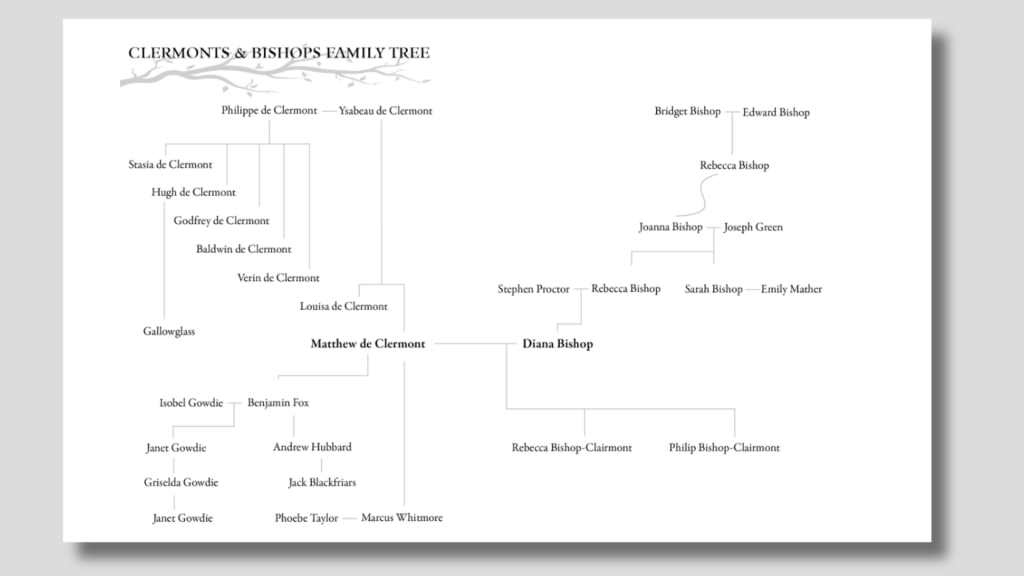
In The Blackbird Oracle, the fifth installment of Deborah Harkness’s All Souls series, we return to the world of Diana Bishop and Matthew de Clairmont. Set several years after the events of Time’s Convert, Diana and Matthew are now parents to seven-year-old twins, Pip and Becca. The story kicks off with a formal demand from the Congregation to test the magical abilities of their children, echoing the trials Diana faced in her youth. This leads Diana to uncover a hidden branch of her family, the Proctors, and explore the depths of her own magical heritage. As she delves into higher magic under the guidance of her great-aunt Gwyneth, Diana must confront her family’s dark past and her own fears, all while protecting her children from the Congregation’s scrutiny.
“We are both caught in its tangles and knots, sometimes the hunter, sometimes the hunted. And sometimes, we are so lost in love’s magic that we neither know nor care whether we are predator or prey.”
COMPARISON WITH PREVIOUS BOOKS
The Blackbird Oracle takes a distinctly different pace compared to the earlier books in Deborah Harkness’s All Souls series. While the original trilogy thrived on a tightly woven blend of pulse-pounding action, sweeping romance, and deep historical immersion, this fifth installment steps back to focus more intently on character backstory, personal growth, and the nuanced exploration of Diana Bishop’s magical lineage.
For readers like me, who fell head over heels for Diana and Matthew’s enchanting yet tumultuous love story in A Discovery of Witches, this shift feels both intriguing and slightly disorienting. The first book was magnetic, pulling you into the clandestine allure of Matthew’s vampire longevity and Diana’s witchcraft, all set against the haunting beauty of Madison County. The vibrant charm of its characters—especially the fierce, no-nonsense Sarah Bishop and the peculiar quirks of the Bishop ancestral home—felt alive on every page.
The second book, Shadow of Night, plunged readers into the dazzling depths of Elizabethan England. Harkness’s expertise as a historian shone brilliantly as we walked arm-in-arm with Diana and Matthew through a world that seemed lifted straight from Hilary Mantel’s Cromwell trilogy. The accuracy of the period was stunning, from the rituals of Elizabethan court life to the intellectual aura of the School of Night. Matthew, here revealed as Matthew Roydon, an English poet and part of this legendary literary circle, elevated the story with thrilling twists rooted in authentic historical lore. Readers were not just immersed in a love story and magical adventure—they were steeped in history, with every chapter breathing life into the past.
Books three and four, The Book of Life and Time’s Convert, were rich in historical storytelling, blending the strengths of Harkness’s academic background with her characters’ own adventures. The depth of their relationships was matched only by the historical breadth of the world they inhabited.
Then comes The Blackbird Oracle. This time, the focus sharply pivots. Instead of intricate historical settings or the dramatic stakes of previous installments, readers find themselves in a more introspective, domestic setting. Harkness unfolds Diana’s personal quest to confront her family’s past and the untapped potential of her dark magic. There’s less Matthew and Diana’s fiery chemistry on display, fewer high-stakes battles, and more quiet moments of reflection and discovery. For fans used to the fast-paced intensity of the original trilogy, this book’s slower tenor might feel like a lull. It meanders, often stopping to savor long stretches of explanation, moods, and family histories rather than the sweeping romance or tangible tension we once cherished.
Yet, despite its slower pace, there’s a subtle promise here. The seeds planted throughout this book could germinate into something extraordinary. The narrative devotes significant energy to their fascinatingly gifted children, Pip and Becca, whose magical potential becomes a central concern. While the immediate focus is on Diana’s internal struggles and her long-buried Proctor family roots, it’s hard to ignore the looming significance of the twins. This installment feels like the groundwork for something grander, a narrative prelude setting the stage for future epic battles, family drama, and magical revelations.
SIMILARITIES WITH HARRY POTTER
The Blackbird Oracle draws fascinating thematic parallels to the Harry Potter series, making it a captivating read for those who love narratives steeped in magical heritage and self-discovery. Both series explore the idea of young, gifted individuals being tested to uncover their abilities, invoking a mix of anticipation, tension, and wonder. The Congregation’s testing of Diana and Matthew’s twins, Pip and Becca, is reminiscent of Harry Potter’s magical examinations, though with a darker, more complex emotional undercurrent. If you’re familiar with Hogwarts’ tales of trials and revelations, you’ll easily recognize echoes of that magical tension here.
One of the most notable additions in this installment is the introduction of wands, which were notably absent in the first four books. This shift in magical tools brings a familiar element from Harry Potter’s world into Harkness’s universe, but it’s worth noting that it takes on a deeper, more ritualistic meaning here. While wands in Harry Potter are often used as practical conduits of power, in The Blackbird Oracle, they signify higher magic, a realm Diana is only beginning to explore. This new facet of magic adds a layer of mystique and expands the universe, but it also marks an interesting departure from the organic, hands-on spellcraft seen earlier in the series. It’s a bold move by Harkness, though some fans of her earlier books might find it jarring.
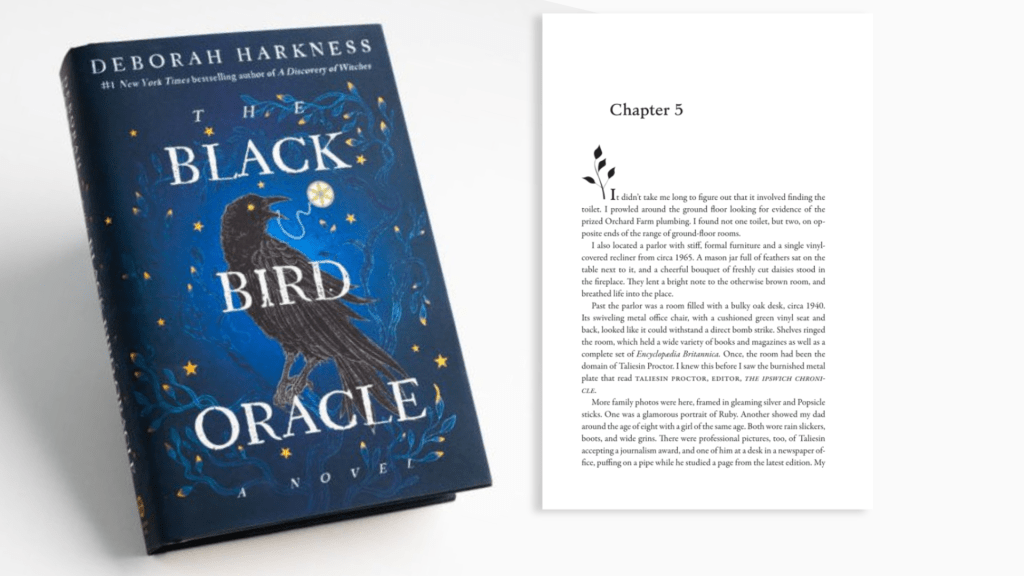
The similarities go beyond tools and involve broader themes of hidden legacies and long-buried family secrets. Diana’s discovery of her father’s Proctor lineage—a sprawling, powerful family she never knew existed—mirrors Harry Potter’s discovery of his own heritage and its inextricable link to the larger magical world. Both protagonists are plunged into the past to understand their future, but while Harry’s heritage aligns him with fate and prophecy, Diana’s requires her to confront uncomfortable truths about her family and their use of dark magic. This complexity adds maturity to the story, which distinguishes it from Harry Potter’s more straightforward battle between good and evil.
What truly sets The Blackbird Oracle apart is its historical grounding and more introspective tone. Unlike the whimsical and often adventurous escapades of Harry Potter, Harkness roots much of the narrative in the weight of historical context. For instance, the Proctor family’s ties to Salem and its witch trials lend a depth of realism and gravity to the story. Harkness’s ability to seamlessly blend historical nuance with fictional magic gives her world a textured, authentic feel that Harry Potter admired but never fully embraced.
Ultimately, while Harkness borrows some familiar elements—a young generation of magical children, hidden families, and all the wonder accompanying the discovery of power—she weaves these into her unique narrative tapestry. The Blackbird Oracle isn’t simply a magical coming-of-age tale; it’s a multilayered exploration of heritage, identity, and the ways in which past and present collide. For readers, it’s an opportunity to relive the enchantment of discovering new magic while appreciating the depth and complexity that only Harkness can deliver. It’s a book where familiar tropes are reimagined through a historical and mature lens, ensuring it never loses its own distinct identity. Whether you’re a Potterhead or a dedicated fan of Harkness’s work, this installment will leave you reflecting on its echoes of the familiar and its bold strides into the new.

CRITIQUE OF THE STORYLINE
While The Blackbird Oracle offers a deep dive into Diana’s family history and magical abilities, it has received mixed reviews regarding its pacing and character development. The book could have been more concise, as it sometimes meanders through detailed backstories and domestic scenes. The introduction of new family members and magical elements, such as the Proctors and higher magic, can feel a bit forced and inconsistent with the established universe. Additionally, some beloved characters from previous books, like Matthew, seem to take a backseat, which might disappoint fans like me of the original trilogy.
Ultimately, while The Blackbird Oracle may lack its predecessors’ electric drama and rich romantic passion, it offers a quieter, more contemplative lens. For readers willing to adjust their expectations, this divergence may reward patience with an expanded understanding of Harkness’s magical world—and tantalizing anticipation of what’s to come for the Bishop-de Clermont family. Whether it fully lives up to its predecessors will depend on what follows, but for now, it acts as a bridge into uncharted waters, promising that the story’s heart is far from finished.
EXPECTATIONS FOR READERS
Readers who have followed the All Souls series will likely appreciate the continuation of Diana and Matthew’s story, despite some of the book’s slower moments. The world-building remains enchanting, and the setup for future conflicts promises exciting developments. However, those expecting the same level of action and romance as the earlier books might find this installment a bit lacking. Overall, The Blackbird Oracle is a worthwhile read for fans of the series, offering a deeper understanding of Diana’s character and setting the stage for what’s to come.


Justine Castellon is a brand strategist with an innate ability to weave compelling narratives. She seamlessly blends her professional insight with her passion for literature. Her literary works include romantic drama novels—Four Seasons, The Last Snowfall, and Gnight Sara / ‘Night Heck. With her ability to tell stories that linger long after the last word, Justine leaves a mark not only in the world of branding but also in the hearts of her readers.


 Just Reading Nook