
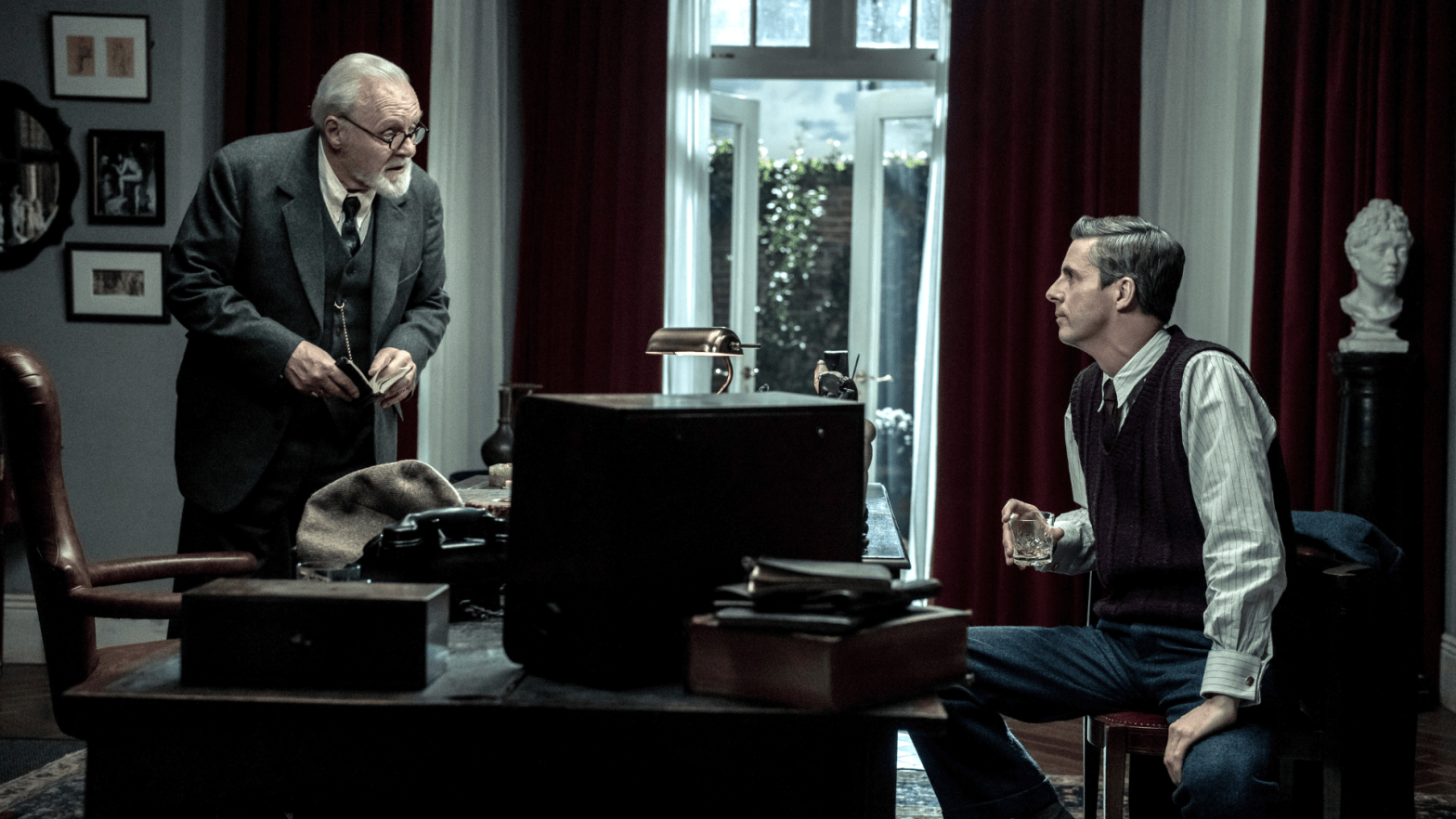
What happens when two of the greatest minds of the 20th century sit down for an intellectual duel? You get Freud’s Last Session, a film that gleefully throws Sigmund Freud and C.S. Lewis into the same philosophical boxing ring. Directed with precision and a clear love for its subjects, this film is a delicious blend of sharp dialogue, human drama, and a touch of humor that keeps things lively. But is it worth your time, or does it just sound fancy on paper? Let’s dig in.
THE PLOT
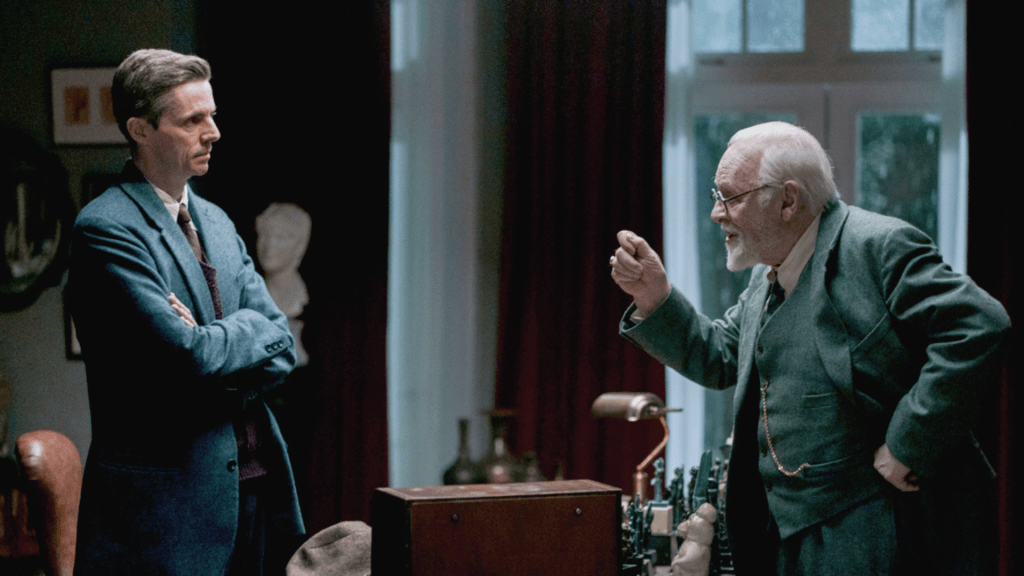
The film imagines a fictional meeting between Sigmund Freud, the father of psychoanalysis, and C.S. Lewis, famed author and theologian, on the eve of World War II. Set in Freud’s London study, the story is primarily a verbal sparring match. These two men, polar opposites in belief, grapple with life’s biggest questions—God, love, death, and the meaning of existence.
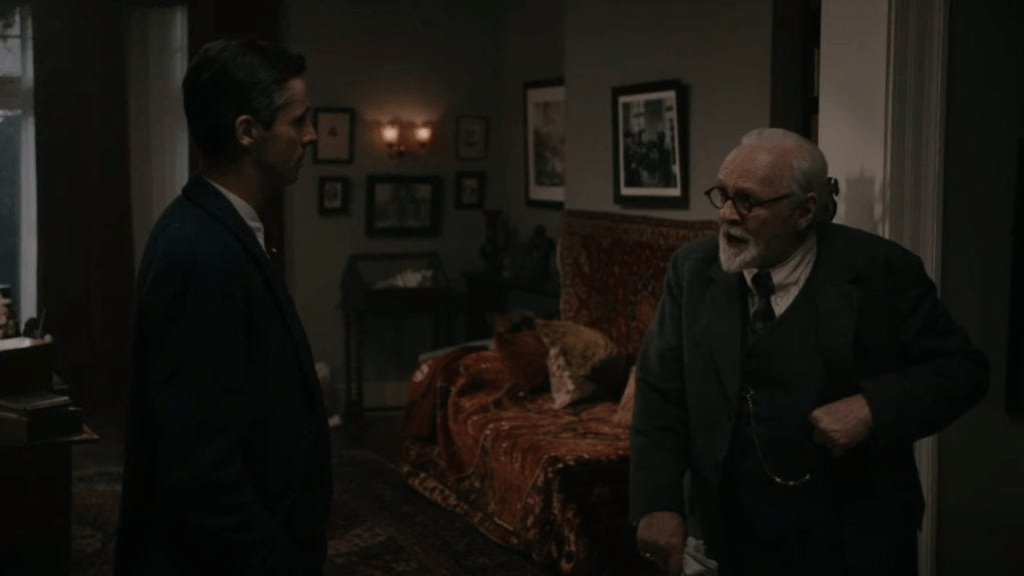
The setting is intimate and almost stage-like, with the outside world creeping in through radio broadcasts warning of impending war. What brings these two together? Freud, whose health is failing from advanced cancer, has invited Lewis to discuss God and faith—Freud is a staunch atheist; Lewis, is a recent Christian convert. Freud, aging and gravely ill, is confident in his atheistic worldview, while Lewis, a younger thinker still grappling with his faith, has recently embraced Christianity. The film’s plot thrives on their sharp, provocative exchanges as they dissect everything from the existence of God to the nature of love, morality, and suffering. Freud’s biting wit and clinical detachment contrast vividly with Lewis’s earnest, sometimes emotional reasoning.
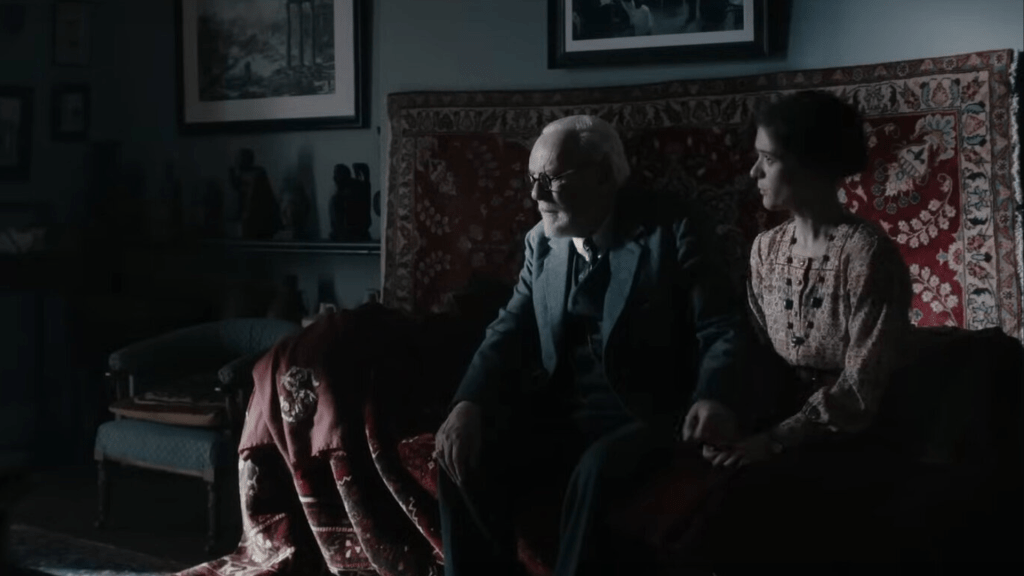
As the conversation deepens, the looming shadow of war seeps into their dialogue, testing their convictions against the backdrop of a fractured and uncertain world. Flashbacks and nuanced character moments offer glimpses into their own pasts—Freud’s struggles with mortality and Lewis’s traumatic experiences in war—revealing how those experiences shaped their ideologies.
The emotional resonance intensifies as the film peels back the layers of their arguments to uncover the shared fears and longings beneath their opposing perspectives. It’s not just a debate; it’s a meeting of minds and souls, grappling with timeless questions in an era when the stakes couldn’t be higher. This 90 minutes of razor-sharp dialogue feels more like a verbal fencing match than a casual chat.
THE ACTING
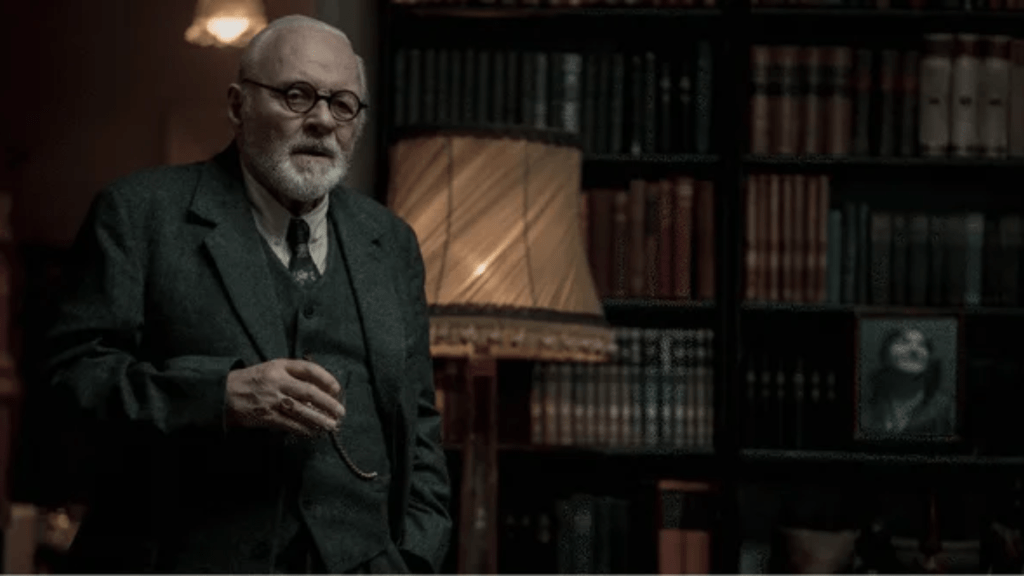
All hail legends! Anthony Hopkins steps into the role of the ailing but sharp-eyed Freud with a quiet ferocity that somehow makes being cantankerous endearing. Hopkins does what he always does best—he makes every single line, every pause, every dismissive wave of his hand, feel like a masterclass in acting. You can almost feel the ache of his illness weighing on him, yet his mind remains wickedly sharp like a lion refusing to back down.
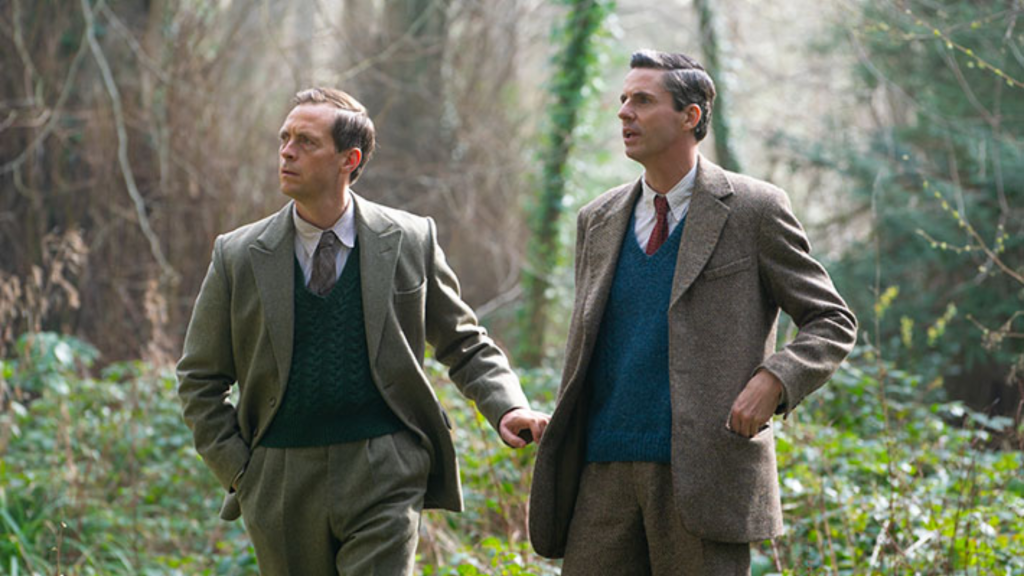
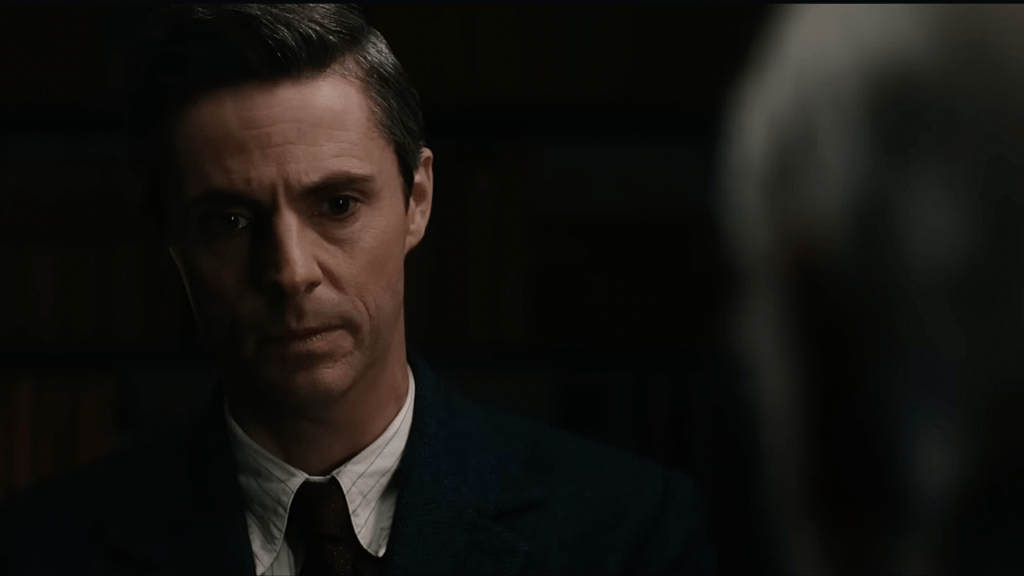
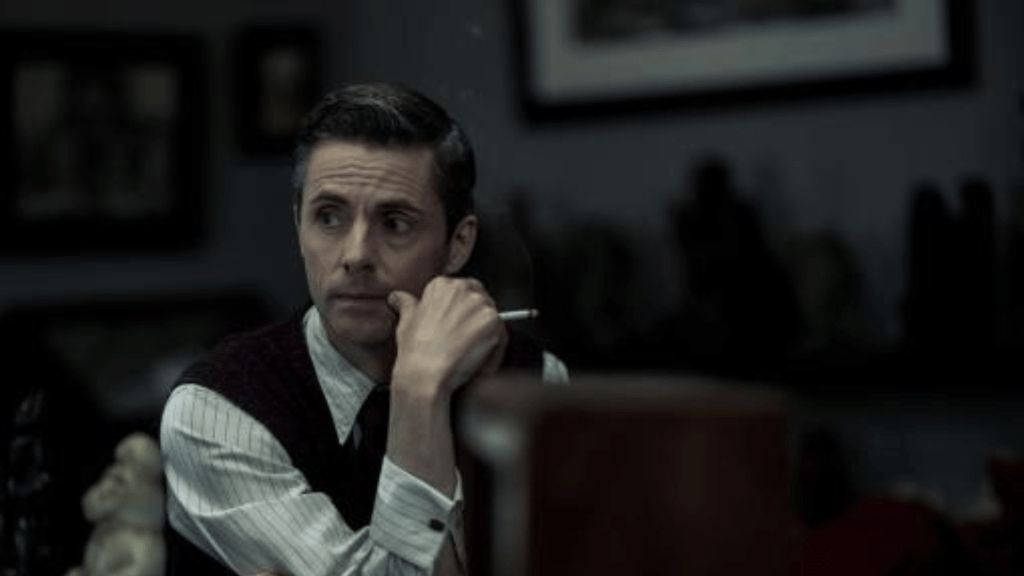
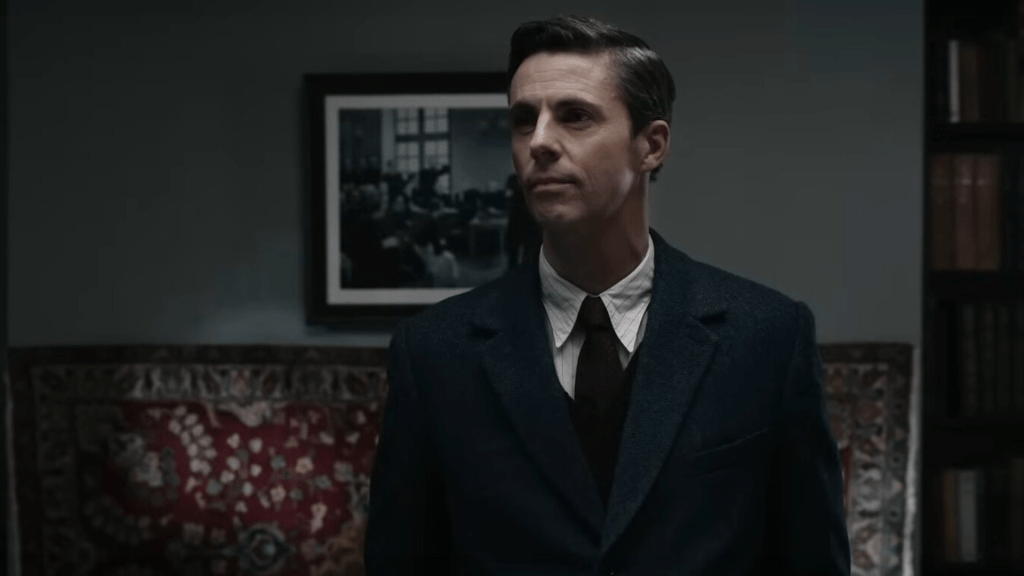
Then there’s Matthew Goode as C.S. Lewis, bringing a calm confidence and just the right amount of warmth to balance the intellectual tension. Goode nails Lewis’s thoughtful nature, his occasional moments of awkwardness, and his fierce conviction. Together, Hopkins and Goode deliver chemistry that’s electric. It’s not the push-and-pull of romantic leads—this is the magnetic tension between two people who can’t decide whether they want to destroy each other’s arguments or secretly admire them.
I had to admit, at first, I was scared for Matthew Goode. Sure, he’s a brilliant actor, but be on the same screen almost 90% of the time, acting side by side with a legend like Hopkins? The man might just eat him alive—and not in the fun Hannibal Lecter way. But to my (very pleasant) surprise, Goode not only held his own but delivered a performance that often matched Hopkins’ precision. His portrayal of Lewis is layered with calm confidence, moments of vulnerability, and a quiet strength that feels like the perfect counterweight to Freud’s tempestuous energy.

THE SCREENPLAY AND STORY
If you’re into fast-paced action or CGI-filled explosions, this is not the film for you. However, if you love your cinema served with heaping portions of wit, gravitas, and existential probing, Freud’s Last Session delivers. The screenplay is adapted from the play by Mark St. Germain, and you can feel the bones of its theatrical roots in every word. The dialogue-heavy script keeps you leaning forward, and while the film mostly takes place in a single room, the writing makes the world feel expansive. It’s a battle of wits with stakes higher than you’d expect; after all, this isn’t just about two men debating. It’s about belief, how we make sense of the universe, and what we cling to when things fall apart.
The inclusion of the looming war isn’t just a historical backdrop—it’s a reminder of the real uncertainty and despair these characters (and the world) are grappling with, whether through Freud’s dogged rationalism or Lewis’s growing faith.

THEMES AND MESSAGES
This film is, at its heart, a meditation on opposites. Freud and Lewis represent two ways of seeing the world—one rooted in science and reason, the other in spirituality and faith. The movie doesn’t pick a side, which is part of its brilliance. Instead, it challenges the audience to sit with these two perspectives and feel the weight of their arguments.
It’s also a deeply personal story. Freud, near the end of his life and in great pain, presents the vulnerability of a man inching toward the unknown. Lewis, meanwhile, is in the earlier stages of his faith—but equally passionate and unshakable. The message seems clear: No matter how much we think we know, life (and death) will always leave us questioning.
IS IT WORTH WATCHING?
If you’re in the mood for a film that will make you pause, ponder, and possibly Google some philosophical terms afterward, Freud’s Last Session is an absolute must-watch. It’s a performance showcase, a beautifully written story, and a film that doesn’t spoon-feed you its themes. Hopkins and Goode elevate the material into something special, and their interplay alone is worth the ticket price.
However, if slow-burn intellectual dramas aren’t your cup of tea or you’re not a fan of a mostly dialogue-driven plot, this might not be the film for you. Otherwise, bring your thinking cap and settle in—it’s a session worth attending. Highly recommended.

Justine Castellon is a brand strategist with an innate ability to weave compelling narratives. She seamlessly blends her professional insight with her passion for literature. Her literary works include romantic drama novels—Four Seasons, The Last Snowfall, and Gnight Sara / ‘Night Heck. With her ability to tell stories that linger long after the last word, Justine leaves a mark not only in the world of branding but also in the hearts of her readers.


 Just Reading Nook