
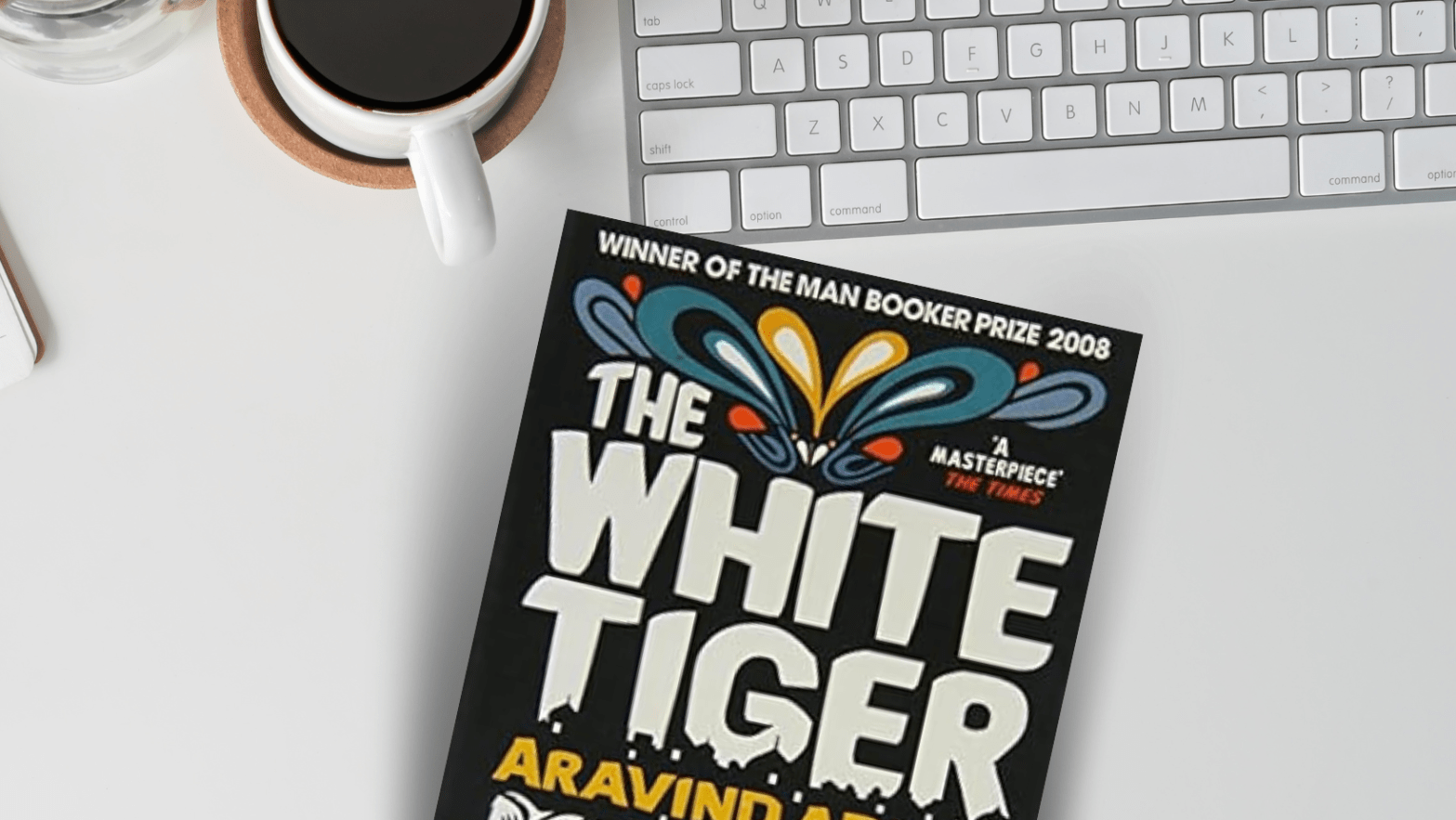
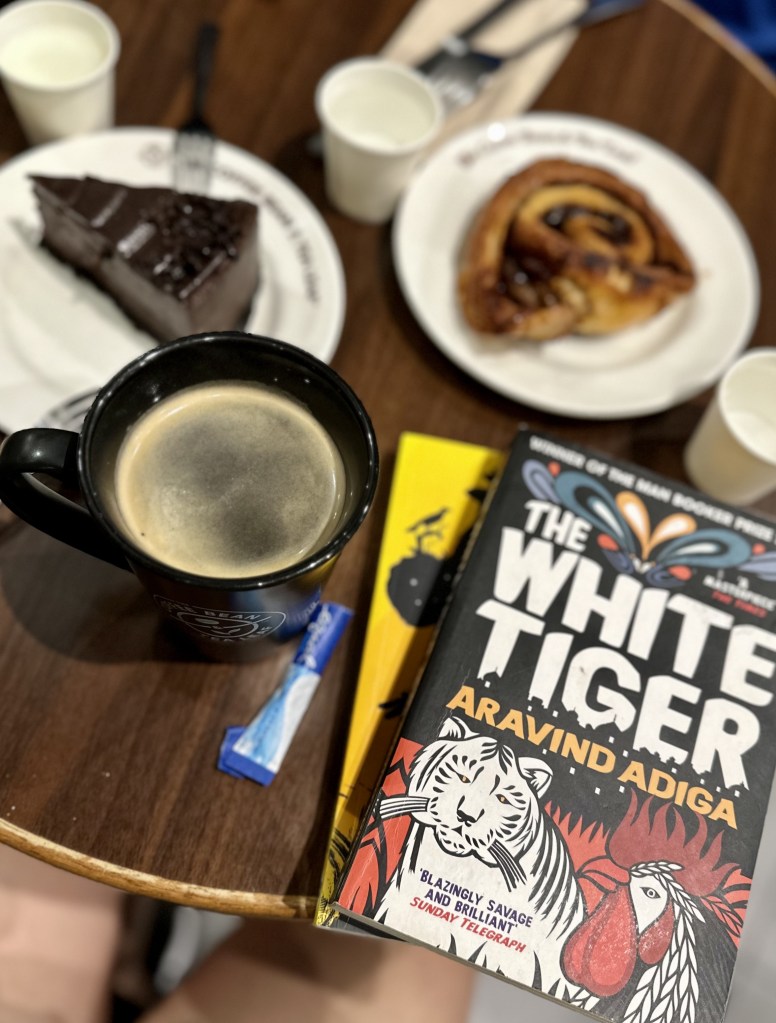
Aravind Adiga’s The White Tiger is not just a book—it’s a provocative plunge into the stark realities of modern India, wrapped up in biting wit and raw honesty. Winner of the 2008 Man Booker Prize, this novel peels back the curtain on the growing chasm between the wealthy elite and the struggling poor through a razor-sharp narrative that is as unsettling as it is entertaining.
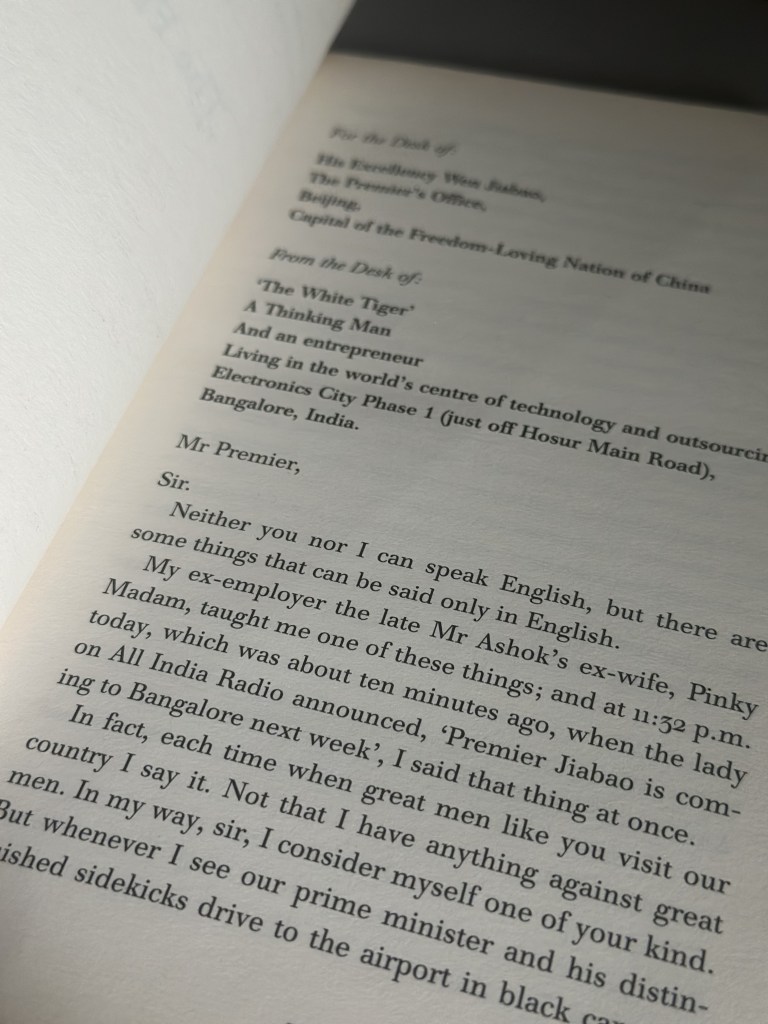
The story unfolds through a series of letters written by Balram Halwai, a self-declared “self-made entrepreneur,” addressed to the Chinese Premier. Set against the backdrop of a rapidly globalizing yet deeply hierarchical India, The White Tiger chronicles Balram’s journey from a penniless villager, born into “darkness,” to an unapologetic murderer and wealthy businessman thriving in the “light.”
Balram begins his story in Laxmangarh, a small village where poverty and societal expectations suffocate ambition. Born into a caste of sweet-makers, his fate seems predestined. However, his sharp mind and innate cunning lead him to Delhi, where he becomes a driver for a wealthy landlord’s son, Ashok, and Ashok’s wife, Pinky Madam. It’s here that Balram experiences firsthand the moral corruption of his employers, their excessive wealth, and the injustices meted out to those at society’s bottom rungs.

This exposure kindles a burning desire for freedom and success within him—a desire that shatters moral boundaries. The breaking point comes when Balram seizes an opportunity to kill Ashok, stealing a bag of money that allows him to escape and start a new life as a businessman in Bangalore. Yet, beneath his chilling transformation, Balram is less a villain and more a mirror reflecting India’s deep inequalities.
Adiga’s Writing Style
Aravind Adiga’s prose is a blend of bluntness and lyricism that vividly captures both the grime and the glamour of India. His sentences crackle with energy—often deceptively light and comedic but loaded with biting satire. The use of first-person narrative, with Balram speaking directly to the reader, gives the story a confessional and conspiratorial tone, drawing you into his morally ambiguous world.
“I was looking for the key for years but the door was always open”
Adiga masterfully develops Balram’s voice, shifting from self-deprecating humor to searing critiques of caste oppression, political corruption, and capitalist greed. His characters are painted with bold strokes, teetering between caricature and authenticity, which makes them immediately memorable. Meanwhile, his ability to contrast rural despair with urban chaos creates a vivid landscape that serves as a character in its own right.
The novel’s structure, delivered as a series of letters, breaks away from traditional storytelling and adds a fresh layer of intimacy and wit. Adiga doesn’t shy away from uncomfortable truths, using sharp metaphors and visceral descriptions to underline the brutality of Balram’s world. However, despite the bleak realities explored, the writing retains a dark humor that keeps the narrative from being overwhelmingly heavy.
Why This Book is Compelling
What makes The White Tiger such a compelling read is its fearless exploration of systemic injustice. It shines a light on the invisible workers who uphold the wealthy’s lifestyles, revealing the exploitation and dehumanization they face. Adiga manages to weave these stark realities with biting humor, making the story gripping without masking its hard truths.
Balram Halwai is a fascinating anti-hero—a character who forces readers to confront their own moral compass. His willingness to break free of societal shackles, no matter the cost, is both appalling and strangely uplifting. Adiga’s portrayal of Balram as an “everyman turned predator” invites readers to grapple with difficult questions about ambition, morality, and survival.
The novel is universally interesting because its themes transcend India; the economic disparity, moral corruption, and quest for upward mobility are issues with global resonance. Adiga’s unique perspective exposes the reader to the harsh dualities of progress—how the quest for success in a capitalist world often requires moral compromises.
Additionally, for readers, The White Tiger is a treasure trove of vivid imagery, unforgettable characters, and profound commentary wrapped in a narrative that balances cynicism with a faint glimmer of hope. Adiga’s uncompromising look at modern India—and by extension, the world—makes this a novel that lingers in your mind long after the final page.
Final Thoughts
The White Tiger is more than a story; it’s an invitation to peer into the darkness lurking beneath the glitter of economic progress. Adiga’s piercing satirical voice and his unflinching honesty create a story that is as entertaining as it is thought-provoking. Whether you read it for its thrilling plot, its dark humor, or its scathing critique of societal inequality, Balram’s tale is one you won’t forget. This is a must-read for anyone who enjoys narratives that are as bold as they are brilliant.

Justine Castellon is a brand strategist with an innate ability to weave compelling narratives. She seamlessly blends her professional insight with her passion for literature. Her literary works include romantic drama novels—Four Seasons, The Last Snowfall, and Gnight Sara / ‘Night Heck. With her ability to tell stories that linger long after the last word, Justine leaves a mark not only in the world of branding but also in the hearts of her readers.


 Just Reading Nook