

This is one adaptation I am eagerly anticipating since it’s based on one of my favorite books. The Guernsey Literary and Potato Peel Pie Society, adapted from the novel by Mary Ann Shaffer and Annie Barrows, treads a fine line in its transition to the screen. Directed by Mike Newell, the film successfully preserves much of the charm and heart of its source material, though it does simplify some of the book’s deeper emotional layers. With its picturesque cinematography, strong performances, and a warm, albeit slightly romanticized, screenplay, the film serves as an engaging escape into a post-WWII story of resilience, community, and self-discovery.
Before we go any further, I have a confession to make. One of the characters, Sidney Stark, is my absolute favorite—and he’s portrayed by my favorite actor, Matthew Goode. Sorry, Dawsey Adams, but Sidney’s got my heart this time around!
Plot
Set in 1946, the story follows Juliet Ashton (Lily James), a London-based writer struggling to move past the wounds of war. Juliet, known for her lively writing in the form of newspaper columns during WWII, is on the cusp of significant personal changes—caught between her charming albeit possessive fiancé Mark Reynolds (Glen Powell) and her own desire for creative fulfillment.
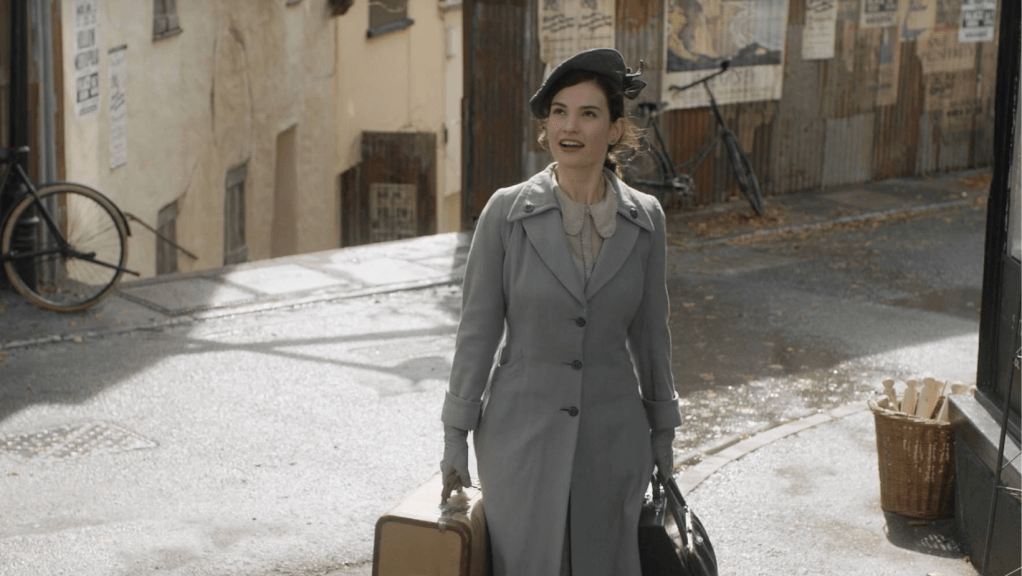
Her life takes a turn when she receives a letter from Dawsey Adams (Michiel Huisman), a farmer on the Channel Island of Guernsey, who stumbles upon a book she once owned. Dawsey’s note sparks a correspondence about a group he’s part of—the oddly named Guernsey Literary and Potato Peel Pie Society—a book club formed as an alibi during the Nazi occupation. Curious, Juliet travels to Guernsey to meet the society members and uncover their history.
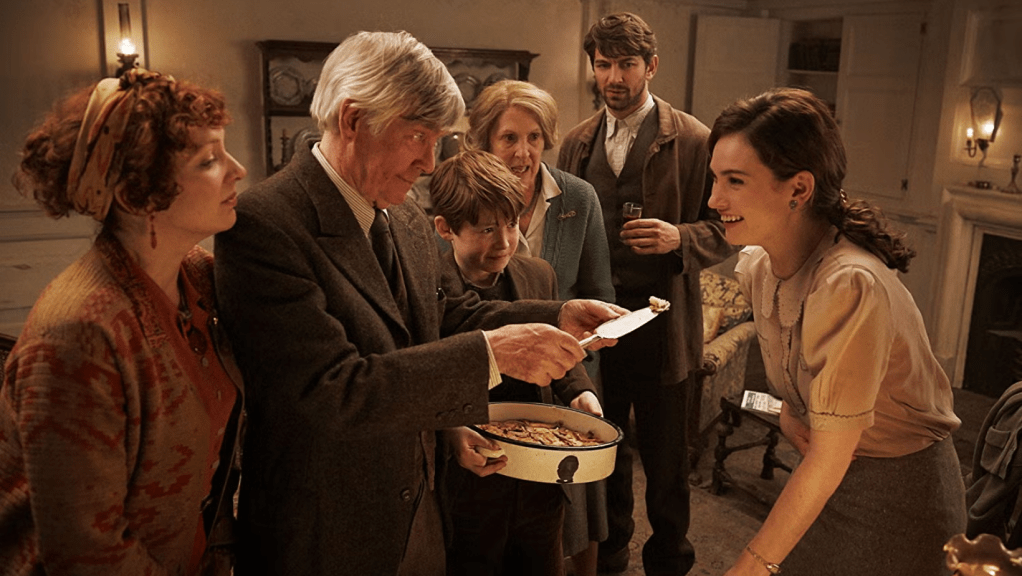
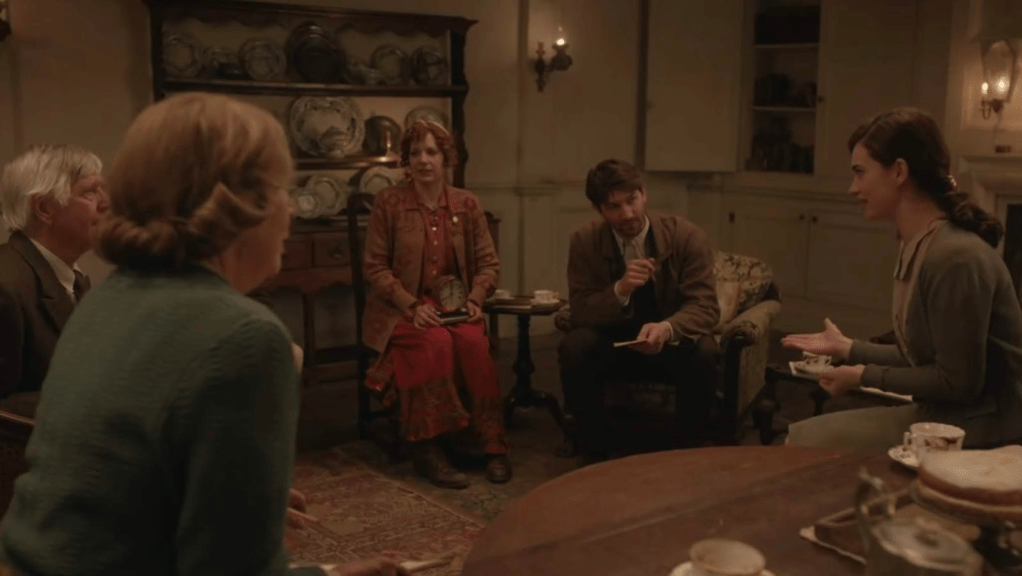
Once there, Juliet forms close bonds with the group, including the resilient Amelia (Penelope Wilton), the quirky Isola (Katherine Parkinson), and the wise Eben (Tom Courtenay). However, her inquiries about the group’s missing founder, Elizabeth McKenna (Jessica Brown Findlay), unravel a web of grief and secrets tied to wartime tragedies. Juliet’s stay becomes an emotional exploration of love, loss, and identity, leading her to question her comfortable but unfulfilling life in London.

The Role of Sidney Stark
A standout in both the book and the film is Juliet’s London publisher and lifelong friend, Sidney Stark (Matthew Goode). Sidney serves as Juliet’s confidant, grounding and supporting her even as she ventures into the unknown world of the Guernsey Literary Society. His dynamic with Juliet goes beyond the typical professional relationship, as he acts as a guiding anchor for her writing, independence, and emotional growth.
Sidney’s character is one of the few constants in Juliet’s life, providing humor, wisdom, and no shortage of witty banter. His suaveness and charm shine through in the film, as Matthew Goode beautifully balances Sidney’s sharp intellect with moments of heartfelt sincerity. Though his screentime is limited compared to the book’s correspondence-heavy format, Sidney’s every interaction with Juliet feels significant, illustrating their deep trust and unshakable friendship.
The film does adjust some aspects of his character. The book’s Sidney is openly gay, a defining aspect of his identity and his connection to Juliet, as it allows them an emotional intimacy free from romantic undertones. While the film hints subtly at Sidney’s sexuality, it resists fully exploring this aspect of his life. This omission, while disappointing for some fans, doesn’t detract from his importance in the story but does feel like a missed opportunity for a richer portrayal.
Sidney’s encouragement pushes Juliet to take risks, both personally and professionally, whether it’s insisting she leave her uninspired fiancé or supporting her decision to write a book about the society. One of the most touching moments in the film occurs when Sidney visits Juliet in Guernsey and sees firsthand the world she’s become a part of. His presence underscores Juliet’s growth over the course of the story, demonstrating how much she’s changed since stepping out of her London bubble.

The Screenplay and Cinematography
The screenplay, penned by Don Roos, Kevin Hood, and Thomas Bezucha, simplifies the novel’s intricate, letter-based narrative while maintaining its core themes. Where the book thrives on the intimate, multi-voiced format of correspondence, the film shifts to a traditional structure, focusing more on Juliet’s perspective and her romantic subplot. While some fans of the novel may miss its epistolary charm and the broader exploration of characters’ inner lives, the screenplay works well for cinematic storytelling, weaving Juliet’s investigation with flashbacks to Elizabeth’s defiance during the German occupation.
The dialogue in the film at times leans into sentimentality, offering poignant moments while indulging in lines that feel designed to tug at heartstrings. One particularly moving scene has Amelia delivering a tearful line about her struggles during the occupation, with Penelope Wilton’s nuanced performance grounding what might otherwise feel overly dramatic.
Visually, the film is a feast for the eyes. Cinematographer Zac Nicholson captures Guernsey’s rugged cliffs, cobblestone streets, and sweeping seaside vistas with painterly beauty, making the island not just a setting but a character in its own right. Sun-dappled landscapes and cozy interiors create a warm, nostalgic tone that softens some of the darker elements of the story. This aesthetic approach fits the film’s escapist aim but occasionally glosses over the grim realities of wartime occupation, which are more vividly explored in the book.

On-Screen Chemistry and Performances
Lily James exudes luminous charm as Juliet, effortlessly carrying the film with a performance that balances curiosity, vulnerability, and strength. Her chemistry with Michiel Huisman’s Dawsey Adams is subtle but earnest, with their developing relationship grounded in mutual admiration and quiet moments of connection. While Huisman’s stoic portrayal compliments James, the romance between Juliet and Dawsey feels slightly rushed compared to the book, where the slow-burning tension is more deeply rooted in the characters’ evolving relationship.
Jessica Brown Findlay as Elizabeth McKenna shines in her flashback appearances, lending courage and compassion to a character central to the society’s backstory. Penelope Wilton and Tom Courtenay are scene-stealers as Amelia and Eben, respectively, imbuing their roles with humor and pathos. Katherine Parkinson offers delightful comic relief as the eccentric Isola, though her character’s layers of loneliness and longing from the novel are somewhat diluted.
Meanwhile, Matthew Goode’s turn as Sidney quietly enhances every scene he’s in. His sharp-tongued humor provides a counterbalance to the romantic and somber tones of the film. Sidney’s protectiveness over Juliet is particularly well-rendered, especially in his disapproving assessment of Mark, which feels like that of an older sibling seeing through an unworthy suitor. The friendship between Sidney and Juliet, rooted in mutual respect and affection, is one of the most endearing highlights of the story.

The Book vs. The Film
One of the biggest changes in the adaptation lies in its focus. While the book gives equal weight to all its characters and their wartime experiences, the film shifts the attention predominantly to Juliet. This simplifies the narrative and makes it more accessible for viewers but comes at the expense of the rich, layered storytelling fans of the book might expect.
The film also leans heavily into the romance, subtly playing down the book’s themes of literary solace, moral courage, and the healing power of community. For instance, Elizabeth’s relationship with a Nazi officer—a significant and morally complex plotline in the book—is mostly glossed over onscreen. Similarly, much of Juliet’s correspondence with the society members is condensed, reducing some of the nuanced backstories that gave the novel its emotional heft.
Sidney’s character particularly benefits from the epistolary style of the novel, as his cheeky, eloquent letters capture his wit and emotional depth in ways the film’s limited dialogue can’t fully replicate. That said, Matthew Goode’s performance manages to imbue Sidney with the warmth and wisdom fans of the book will recognize, even if some details of his personal life are less explicit.

Final Thoughts
The Guernsey Literary and Potato Peel Pie Society is a heartfelt, visually stunning film that captures much of the novel’s spirit while softening its edges. It offers a comforting blend of drama, romance, and historical wistfulness, though it occasionally trades depth for sentimentality. Lily James anchors the story with a graceful performance, supported by a strong ensemble cast and Zac Nicholson’s breathtaking cinematography.
Sidney Stark, in particular, stands out as a beloved character whose wit, loyalty, and deep friendship with Juliet enrich the narrative in both the book and the film. While purists may lament the loss of the book’s epistolary richness and its nuanced approach to complex themes, the film delivers on its promise of escapism, inviting viewers to lose themselves in a tale of love, literature, and the enduring bonds of community. It may not entirely capture the magic of the book, but it still offers a satisfying and moving experience that lingers well after the credits roll.

Book Review:
THE GUERNSEY LITERARY AND POTATO PEEL PIE SOCIETY
The story centers around Juliet Ashton, a 32-year-old book author who goes on a cross-country tour across England to promote a book under her pen-name Izzy Bickerstaff, a compilation of comedic columns about life during World War II. As she explores a new subject for her next writing assignment, she receives a letter from Dawsey Adams from the island of Guernsey.

Justine Castellon is a brand strategist with an innate ability to weave compelling narratives. She seamlessly blends her professional insight with her passion for literature. Her literary works include romantic drama novels—Four Seasons, The Last Snowfall, and Gnight Sara / ‘Night Heck. With her ability to tell stories that linger long after the last word, Justine leaves a mark not only in the world of branding but also in the hearts of her readers.


 Just Reading Nook
One thought on “The Guernsey Literary and Potato Peel Pie Society: A Blend of War, Love, and Literature”